The National Library and Archives Hosts Lecture on Documenting the History of the UAE Through Coins During the Early Islamic Period
The National Library and Archives Hosts Lecture on Documenting the History of the UAE Through Coins During the Early Islamic Period
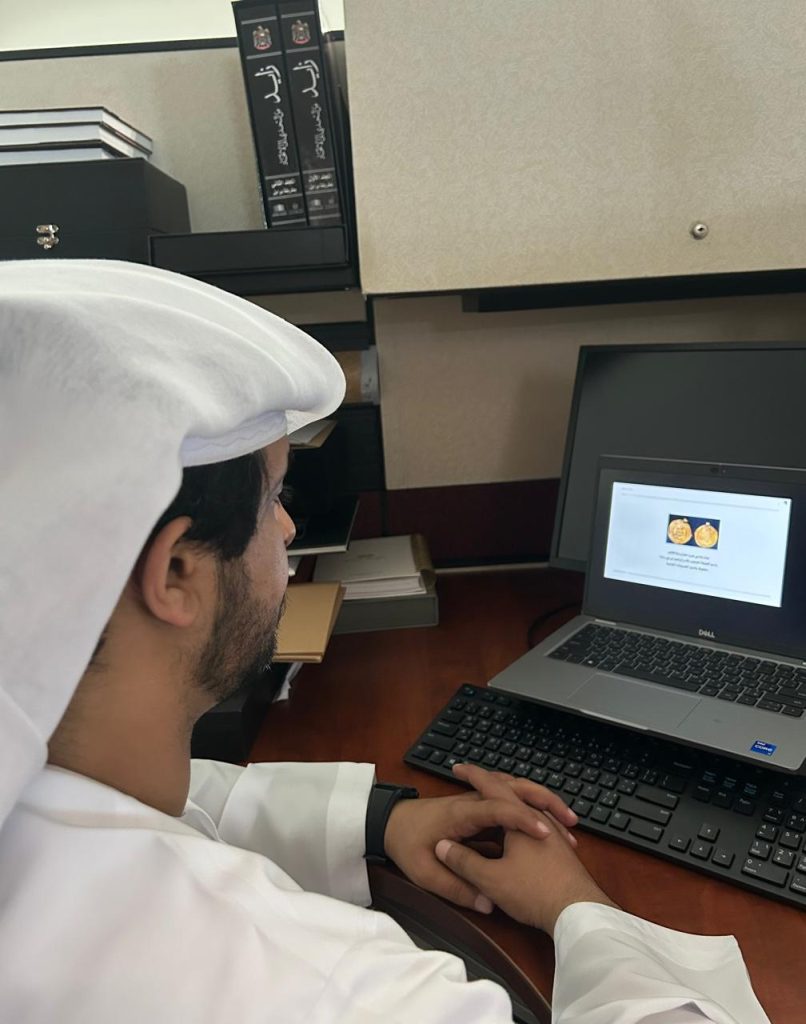
The National Library and Archives (NLA) organized a specialized academic lecture titled “Documenting the History of the UAE through Coins in the Early Islamic Period – From the Advent of Islam to the End of the Second Abbasid Era. The lecture was delivered by Dr. Atef Mansour Mohamed, Professor of Islamic Numismatics and Archaeology, as part of the NLA’s ongoing efforts to document the history of the United Arab Emirates through tangible evidence and authentic primary sources.
The lecture highlighted the vital role of coins as official historical documents that shed light on the political and economic history of nations. It emphasized that the territory of the Emirates was an active part of the early Islamic world, enjoying a prominent economic and commercial status due to its strategic geographic location—making it a major hub along key regional and international trade routes.
Dr. Mansour presented an overview of the UAE’s geographical and administrative landscape during the early Islamic eras, underscoring the region’s historical importance and the role played by several local families who contributed to its governance and development.
He noted that the coins circulated in the Emirates in ancient times included Byzantine dinars and Sasanian dirhams, which have been uncovered in archaeological findings that attest to the area’s commercial and cultural prosperity. Additionally, dinars minted during the reign of Emperor Heraclius were also among the currencies in use.
The virtual lecture further explored coins from the Abbasid Caliphate, issued during the reigns of prominent rulers such as Abu Jaafar al-Mansur, Mohammad Al-Mahdi, Harun Al-Rashid, Mohammad Al-Amin, Abdullah Al-Maamun, and Al-Mutawakkil ‘ala Allah. It also showcased dinars and dirhams bearing the names of notable figures such as Mismar bin Salam, Ahmed bin Hilal, Abdul Halim bin Ibrahim, Yusuf bin Wajih, and Mohammad bin Yousuf bin Wajih. The rare coins that were displayed included the Samanid fals.
Images of these coins were displayed during the lecture, drawn from both local and international museum collections, as well as from the distinguished private collection of Mr. Abdullah bin Jassim Al-Mutairi.
Dr. Mansour highlighted that coins discovered at archaeological sites within the UAE—including those at Madam, Jumeirah, Al-Nudud, and Al-Hilaila Island—alongside discoveries in cities and ports on the Arabian Gulf’s opposite shore, demonstrate the region’s extensive trade networks and its pivotal role in the commercial and cultural life of the Gulf.
This lecture is part of the National Library and Archives’ commitment to shedding light on the historical and cultural dimensions of the UAE and to documenting them through scientific research based on archaeological numismatics, which enrich understanding of the past and support specialized historical studies.
The event attracted significant interest from scholars, senior museum officials, and historians of the UAE, with participants contributing valuable academic insights during the discussion.
It is also worth noting that the National Library and Archives remains dedicated to the historical study and documentation of coinage in the Emirates. In this regard, it has published a book titled “The Trade of Metal Currencies in the Emirates of the Western Coast of the Arabian Gulf (1929–1949).”