
The National Library and Archives Celebrates Sheikh Zayed’s Efforts in Founding a Nation of Civilisation and Humanity
The National Library and Archives Celebrates Sheikh Zayed’s Efforts in Founding a Nation of Civilisation and Humanity
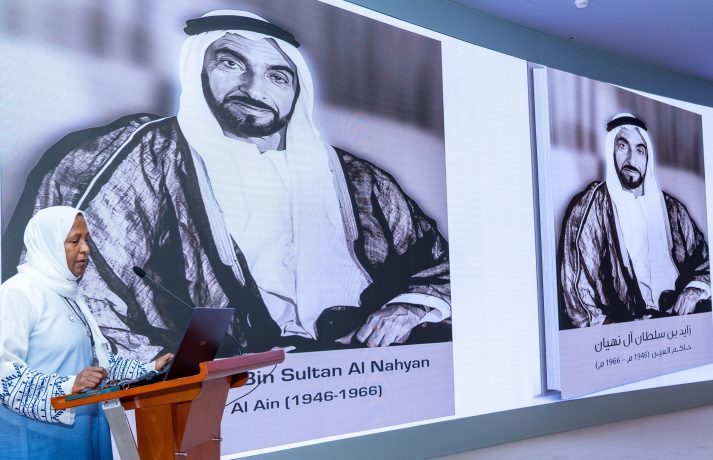
The National Library and Archives (NLA) organized a historical photo exhibition, and a lecture titled “Zayed: Founder of a Nation of Civilisation and Humanity”. The two events revealed important historical facts about Sheikh Zayed bin Sultan Al Nahyan’s enduring legacy, highlighting his great efforts in achieving the nation development and prosperity, and highlighted Sheikh Zayed’s achievements, wisdom, goodwill in building the human, and his vision that has preceded his time in sustainability and preservation of national knowledge.
Dr Aisha Bilkhair, Research Advisor at the NLA, began her lecture by affirming that everyone who was close to the late Sheikh Zayed bin Sultan Al Nahyan drew from his wisdom and benefited from his experience in all aspects of life. This was acknowledged by the senior citizens as they recounted their memories of the period before and after the union’s establishment. She then highlighted important aspects of his honorable life and the significant developments the United Arab Emirates and its people witnessed through his noble efforts. She spoke about his noble lineage and his shared qualities with his grandfather, Zayed the Great. She noted that the remarkable transformation of the UAE into flourishing oases where life thrives, and the numerous vital and developmental projects that contributed to human advancement in various fields. All these heralded the establishment of the Union, which stands as a profound lesson in nation-building.
With documented information, the lecturer confirmed that after Sheikh Zayed assumed leadership in Abu Dhabi, he showed great interest in providing drinking water from Al Khatim and Al Saad to Abu Dhabi, and in constructing roads to facilitate communication among the people of the nation. He was known for personally checking on his people’s well-being and listening attentively to both the elderly and the young.
What further affirms his efforts in serving the environment and combating desertification is the planting of millions of palm trees, which he was committed to spreading and sustaining in Al Ain and across the entire UAE. He also placed great importance on Ghaf trees, preserving historical trees, and expanding green spaces throughout the UAE, defying the opinions of agricultural experts. The greatest example of his success is Sir Baniyas Island, the green sanctuary that demonstrated to the world that Sheikh Zayed was able to conquer the impossible.
The lecture, which was held in Sheikh Mohamed bin Zayed Hall, presented Zayed’s wise visions in transforming the UAE into a modern civil state, and his significant role in designing the architecture of Abu Dhabi. In this, he carefully balanced the preservation of authentic Emirati traditions with the needs of contemporary society. He also played a pivotal role in creating the UAE’s emblem, flag, national anthem, and currency, and was deeply committed to the happiness and well-being of his people, ensuring they had access to all necessary services from birth. In addition, he was keen to keep pace with the global developments, which required him to work tirelessly around the clock for the advancement of the UAE and its people.
Dr Aisha Bilkhair presented the views of several men who accompanied Sheikh Zayed, such as Sheikh Salem bin Ham Al Amri, Muhanna Butti Al Qubaisi, Abdullah bin Mohamed Masoud Al Muhairbi and Sheikh Mubarak Bin Qaran Al Mansouri, and others.
The lecturer – through photos and documents – highlighted Sheikh Zayed’s efforts in attracting successful and distinctive experiences from the countries he visited and developing them within the UAE, emphasizing that the progress the UAE witnessed during his blessed reign made him an exemplary leader who carried the responsibility with confidence and integrity, earning him the status of a role model for future generations.
The lecturer affirmed that Sheikh Zayed’s wise and insightful vision has greatly contributed to the progress and development that the United Arab Emirates is experiencing under its wise leadership, which continues to follow the path of the founder and builder.
The National Library and Archives organized a historical photo exhibition at its headquarters, showcasing images from its Historical Archive Section, that document the march and remarkable achievements of the founding leader, Sheikh Zayed bin Sultan Al Nahyan. The National Library and Archives is pleased to welcome visitors interested in viewing the historical photo exhibition.
The National Library and Archives Celebrates Sheikh Zayed’s Visions and Sustainable Legacy
As part of the Seminars of its 2024 Cultural Season,
The National Library and Archives Celebrates Sheikh Zayed’s Visions and Sustainable Legacy
The National Library and Archives shed light upon a collection of sustainable visions of the late founder and builder Sheikh Zayed bin Sultan Al Nahyan, which still remain firmly rooted in the identity of the United Arab Emirates in locally, regionally and globally. These ambitious visions have significantly contributed to the growth and progress of the UAE under the wise leadership that has followed Sheikh Zayed’s path.
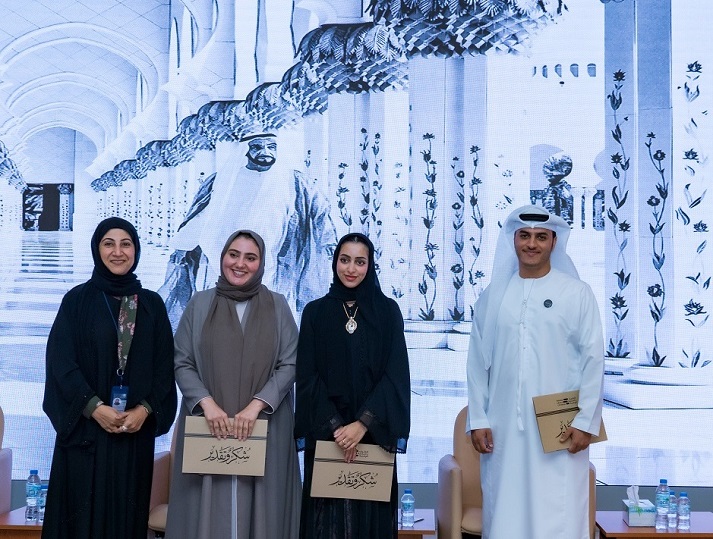
The seminar, part of the 2024 cultural season, featured several young researchers from the Trends Research & Advisory and Sheikh Zayed Grand Mosque Center. They documented aspects of the late Sheikh Zayed bin Sultan Al Nahyan’s contributions and his emphasis on the human element as the true wealth of the nation. They also discussed the development of the UAE under his leadership, his efforts in transforming the desert sands into a flourishing oasis, and the prosperous homeland that now holds a significant position among the world’s advanced countries.
Dr. Husniya Mohammed Al Ali, Educational Programs Consultant at the National Library and Archives, opened the seminar, emphasizing that Sheikh Zayed’s legacy will remain forever in the UAE and in the hearts of its people and residents. The National Library and Archives highlights a collection of his wise visions and remarkable achievements both locally and globally to draw inspiration from them, strengthen our national principles and human values, to guide us as we strive for a more prosperous future.
The seminar began with a paper by Mr. Hamad Al Hosani from Trends Research & Advisory. He emphasized that Sheikh Zayed placed significant focus on education, empowerment, and ensuring the welfare of all segments of society, both in the UAE and globally. Sheikh Zayed worked tirelessly to protect the heritage of our land, environment, and natural resources. He pointed out that Sheikh Zayed regarded people as the true wealth of the nation. Additionally, he was committed to establishing and building all facilities, which earned the UAE a prominent place on the world map.
Al Hosani stated, “Sheikh Zayed’s approach to sustainability is evident across various fields, including economic, social, environmental, and cultural sectors. The factors influencing his sustainable thinking stemmed from his upbringing in an environment rich in cultural and human heritage.”
He also asserted that the UAE’s wise leadership continues to draw benefit from Sheikh Zayed’s legacy, following his path in shaping sustainable development agendas across all sectors to ensure a better future for the coming generations.
Next, Ms. Najla Al Madfa from Trends Research & Advisory presented her paper, affirming that the legacy of a visionary leader is not just history but a living testimony that shapes our present and inspires our future. Sheikh Zayed bin Sultan Al Nahyan, the founding father and wise builder of the UAE, focused on building a strong modern state based on principles of unity, cooperation, and justice, ensuring a dignified and happy life for every citizen. His goal was not only to achieve well-being for his people but also to embody human values and provide a decent life on a broader scale.
Under his wise leadership, the UAE transformed from a barren desert into a prosperous and advanced nation in the various fields of science, knowledge, and health. This progress originated from Sheikh Zayed’s dedication to people, seen as the true foundation of sustainable development. The UAE’s leadership continues to draw values from Sheikh Zayed’s legacy, following his path in establishing sustainable development agendas to ensure a better future for generations to come.
Ms. Najla Al Madfa emphasized that Sheikh Zayed’s legacy extends beyond infrastructure and grand projects; it is deeply rooted in the values and principles, hard work, loyalty to the homeland, and commitment to community service. This is what makes us proud of our country and its wise leadership.
She stated “His Highness Sheikh Mohamed bin Zayed Al Nahyan, President of the UAE, launched the ‘Zayed Humanitarian Legacy Initiative’ with a budget of 20 billion Dirhams dedicated to humanitarian efforts in the most needy communities worldwide. This initiative coincides with Zayed Humanitarian Day and marks the 20th anniversary of the passing of the founder, Sheikh Zayed bin Sultan Al Nahyan”.
On the occasion, His Highness remarked, “Preserving Zayed’s legacy is a shared responsibility; his name has always been associated with benevolence and humanity, and we will continue to uphold this inspiring legacy.”
Ms. Amina Al Hamadi from Sheikh Zayed Grand Mosque Center then spoke about Zayed’s legacy, focusing exclusively on Sheikh Zayed Grand Mosque in Abu Dhabi. She highlithed how the mosque stands as a monumental and sustainable legacy celebrating Sheikh Zayed’s values, which have become deeply ingrained in the hearts of the UAE’s citizens and residents. The mosque is a landmark that showcases the nation’s and society’s values to the world, prominently featuring tolerance, coexistence, and strengthening relations with people globally.
Al Hamadi highlighted that the mosque was designed by Sheikh Zayed to symbolize unity, tolerance, coexistence, and integration among the world’s peoples.
She elaborated on the architectural features of the mosque, its global recognition reflected in the high number of visitors, and the numerous writings about on international websites. The mosque also plays an educational role, presenting Sheikh Zayed’s noble principles and values to the world.
Al Hamadi concluded by affirming that a leader and founder like Sheikh Zayed will always be our enduring source of inspiration and a symbol of our identity and national culture, of which we are immensely proud.
The National Library and Archives Presents Emirati Deep-rooted Traditions in the Dates Season ‘Mqeez’
The National Library and Archives Presents Emirati Deep-rooted Traditions in the Dates Season ‘Mqeez’
In conjunction with the mid Mqeez season, the National Library and Archives organized a lecture titled: “Mqeez in the Mountains and Sands”. Information were drawn from interviews with senior citizens conducted by the Oral History Section. The lecture highlighted an important phase in the lives and sustainable heritage of the ancestors.
The lecture began by discussing the interest of the founder and builder Sheikh Zayed bin Sultan Al Nahyan in agriculture and his achievements in palm cultivation and various crops, reflecting his famous saying: “Give me agriculture and I will guarantee you civilization”.
The lecture, presented by researchers Madya Al Mehairbi and Hend AlZahmi from the Oral History Section at the National Library and Archives, defined Mqeez season and then reviewed the customs and traditions of the people starting from their journey to the oases and Mqeez locations, to its midpoint known as Jamrat Al Mqeez, or Ghurzat Al Mqeez, up to its end. The lecture revealed many details about the Emiratis’ dedication to preserving this proud heritage.
The lecture showed that the appearance of semi-ripe dates, known as ‘Tabasheer Al Rutab’, marks the beginning of the date season and its first harvest, as described by the poet Ousha bint Khalifa Al Suwaidi: “The rise of the Pleiades begins with the early signs ‘Rutab dates’ / And after two weeks, friends exchange them.” This confirms that Mqeez season starts with the rise of the Pleiades, and Mqeez refers to summer, as explained by Dr. Sultan Al Ameemi. The lecture also covered the means of travel to Mqeez areas, noting that people used to travel on camels and Land Rovers, moving to areas abundant with palm trees and valleys. The people of Abu Dhabi used to spend the Mqeez season in Al Ain and Al Dhafra regions.
In the middle of the Mqeez season, people harvest dates, including varieties such as Naghal, Anwan, Khinizi, Hilali, Fard, Khushkar, and Ain Al Baqara, among others. As for Lulu, it ripens later. Mqeez fruits also include mangoes, known locally as “Hamba.”
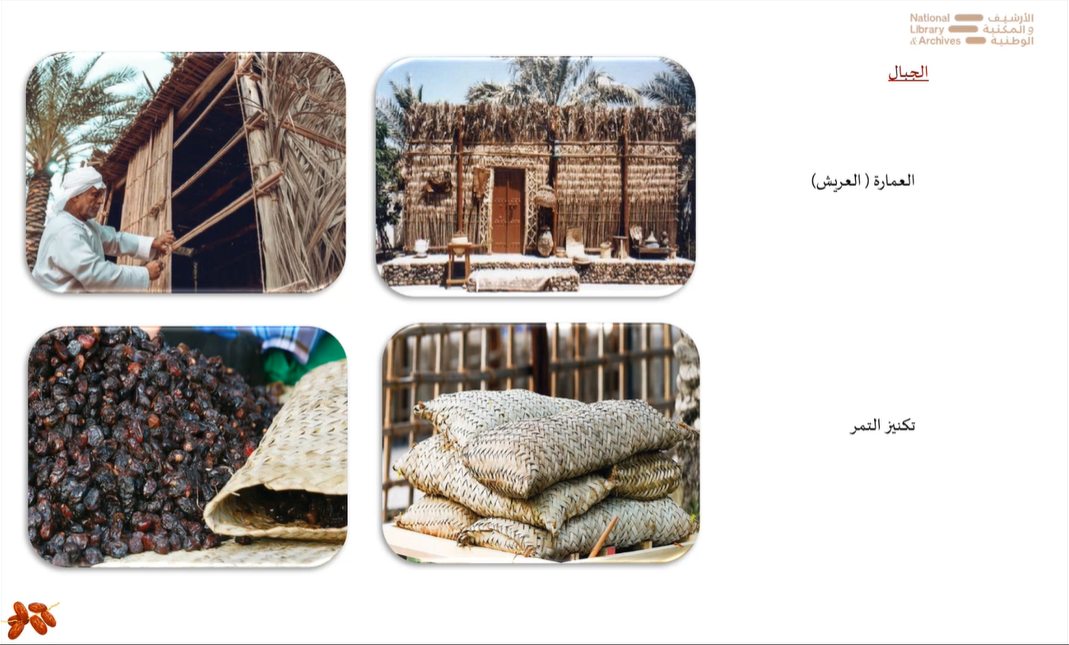
The lecture highlighted the importance of sustainability by following the ancestors’ approach, noting that they utilized every part of the palm tree for building shelters, tents, household tools, and food products. This practice demonstrates their commitment to environmental resource sustainability. They made ropes and rags from palm fronds and leaves to use them for fishing.
At the end of Mqeez season, they used to preserve dates and extract their syrup to use for preparing foods during winter that would last throughout the year.
The lecture praised the UAE’s efforts and dedication to celebrating heritage through various activities, notably registering the palm tree in the UNESCO Representative List of Intangible Cultural Heritage, Liwa Date Festival, and Dhaid Date Festival. The lecture also commended the role of the National Library and Archives in preserving and sustaining the heritage for future generations.
The lecture listed the popular dishes made with dates and the important products derived from the palm tree, such as hayb (the palm kernel), attar, date juice, coffee made from date pits and others, all of which demonstrate sustainability.
The National Library and Archives Shed Light on the Health Conditions in the Trucial States
The National Library and Archives Shed Light on the Health Conditions in the Trucial States
The National Library and Archives organized a virtual lecture on health conditions in the Trucial States from 1900 to 1971. The lecture demonstrated that people in the Trucial Coast relied on traditional medicine and that, due to the prevalent health condition, medical services were urgently needed.
The lecture, presented by the Researcher Dr. Asmaa Yousef Al Kindi, showcased various diseases and epidemics that claimed many human lives on the Trucial Coast, such as the plague, measles, smallpox, tuberculosis, Malaria, and both intestinal and eye diseases, highlighting that these epidemics spread rapidly due to political, social, military, and business reasons.
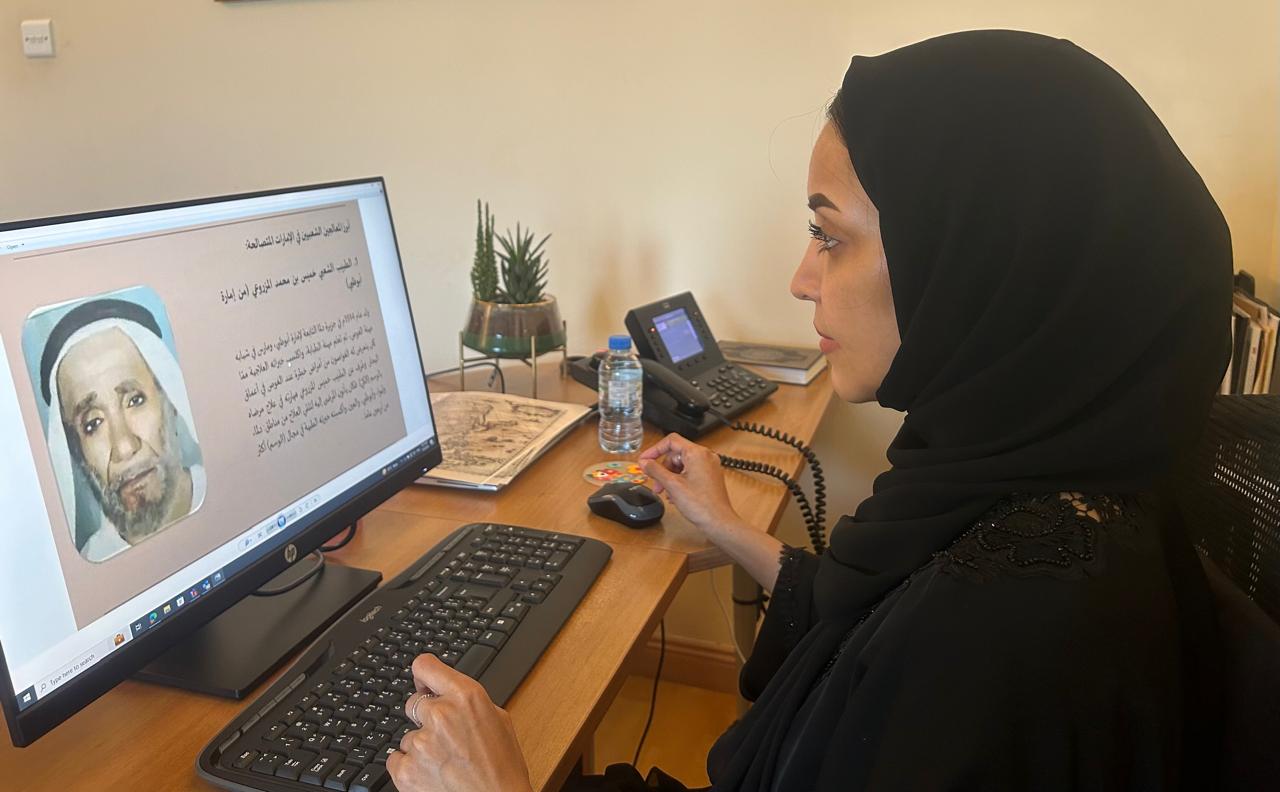
The lecture discussed several diseases and epidemics that have affected the Trucial Coast over the past three decades and shed light on the role of traditional medicine and folk healers in addressing these diseases. It highlighted how traditional medicine played a major role in treating people on the Trucial Coast through various practices, including Hijama (wet cupping), marking (cauterization), wiping, massage, as well as injuries treatment such as wounds were addressed with water, salt, and Arabic frankincense, while broken bones and fractures were treated with splinting, and abdominal diseases were treated with folk recipes.
The lecture also introduced several folk healers in the Trucial Coast, such as the folk healer Khamis bin Mohammed Al Mazrouei from Abu Dhabi was known for treating his patients with cauterization, the folk healer Rashid bin Abdullah bin Mohammed Al Shehhi from Ras Al Khaimah was famous for treating with cupping and preparing medicinal herbs. As well as the folk healer Saleh Al-Mutawa from Dubai who wrote a medical manuscript that includes sixty-seven chapters on various parts of the human body, preserved at the Juma Al Majid Centre. Additionally, the folk healer Ali bin Amer bin Saif Al Rawahi Al Absi from Fujairah was known for his treatment of fevers and tuberculosis and was skilled in the art of vaccination. The lecture also mentioned the visits of some itinerant physicians from Arabian Gulf countries and Arab countries to the Trucial Coasts.
Dr. Asmaa Al Kindi pointed out that the American-Arab missions and their health and medical role in the Trucial States has introduced several doctors, including Samuel Marinus Zwemer, Sharon Thomas, and Dr. Sarah Hosmon.
The National Library and Archives Enriches its Historical Database with Documents from the Portuguese Era
In collaboration with the Portuguese National Archives, and upon an Agreement Concluded in Lisbon,
The National Library and Archives Enriches its Historical Database with Documents from the Portuguese Era
The National Library and Archives signed an agreement with the Portuguese National Archives as part of its pioneering project that supports the Memory of the Nation with historical documents and records. These documents, from global archives that cover important periods in the history of the UAE and the region. The project aims to enrich a vast and unique database that enhances its status among the world’s leading archives and underscores its role in building and promoting knowledge societies.
This agreement is an important step in a project adopted by the National Library and Archives aimed at collecting historical documents and records from global archives and making them available in an online database. This database will serve as a source and reference for researchers and those interested in the history of the UAE and the Gulf region, in terms of preserving documentary heritage and affirming the National Library and Archives’ cultural and intellectual mission. The agreement supports the Arabian Gulf Digital Archive (AGDA) project with a large number of Portuguese historical documents that include significant events from the 16th century and describe aspects of the economic and social conditions of that period. In this way, the National Library and Archives documents historical eras that the UAE and the Gulf region have gone through, providing a valuable service to researchers, academics, students, and those interested in the history of the UAE and the region worldwide. It offers this wealth of global scientific knowledge in both Arabic and English in a single database, making it a unique historical resource.
This agreement is part of a series of cooperation agreements signed by the National Library and Archives with numerous global archives in countries that had long-standing historical ties with the United Arab Emirates. These agreements confirm, through historical documents, the UAE’s geographical and economic significance in ancient historical eras.
Following its strategy, the National Library and Archives adopts a scientific approach and specific methods in implementing this project, upon which the agreement was signed. Through this agreement, the National Library and Archives obtains historical records and documents pertaining to the UAE and the region during the Portuguese era, which lasted approximately a century and a half in the region. The National Library and Archives will then engage in translating and digitizing these historical materials, ensuring their long-term preservation and making them accessible to the public through the most effective channels.
The agreement was signed by His Excellency Abdullah Majid Al Ali, Director General of the National Library and Archives, and His Excellency Dr. Sylvester Lacerda, Grantor of License from the Portuguese National Archives, at the National Archive of Torre do Tombo in the Portuguese capital, Lisbon.
Regarding the agreement and the joint project, His Excellency Abdullah Majid Al Ali stated, “The National Library and Archives is keen to contribute to to strengthening the connections of civilization and documenting the history of the UAE and its interaction with other civilizations and people of the world throughout history. We aim to preserve memory of the UAE and make it accessible to future generations. The historical ties between the UAE and Portugal are worthy of being a preserved chapter for the generations and accessible to researchers and to those interested. This chapter will be an important part of the Encyclopedia of the History of the United Arab Emirates, in which we aim to promote well-documented historical information, serving as a broad gateway to our deep-rooted history.”
His Excellency, along with his delegation, praised the Portuguese National Archives for their enthusiasm in collaborating on this project, which sheds light on periods in the history the two friendly countries. He noted that the Portuguese records, manuscripts, correspondences, and documents are rich in intellectual and historical value, opening up new intellectual horizons for researchers and interested individuals that were previously out of reach.
It is worth mentioning that a delegation from the National Library and Archives, headed by the Director General, visited the Portuguese National Archives. The agreement was signed in the Portuguese capital. Following this, the delegation visited several institutions holding historical archives to seek documents related to the region’s history, explore their digitization process, and consider the possibility of indexing and archiving them to understand their contents. These documents will then be made available on the Arabian Gulf Digital Archive (AGDA) website.
The National Library and Archives, in collaboration with major companies, will explore the Portuguese memory for historical documents related to the UAE and the Gulf region.

The National Library and Archives Organizes a Session on Personal Financial Literacy
The Harf Reading Club gives a reading from “Financial Freedom: A Proven Path to All the Money You Will Ever Need”
The National Library and Archives Organizes a Session on Personal Financial Literacy
Within the context of transferring and enhancing knowledge in various areas of life, the Harf Reading Club at the National Library and Archives organized a cultural session to delve into the best-selling book “Financial Freedom: A Proven Path to All the Money You Will Ever Need,”. The session shed light on the economic aspect and the significance of money in our lives. It differentiated between the importance of money as a tool that allows independent and dignified life and as an end that consumes one’s life. Moreover, the session underscored that time holds greater value than money, noting that anyone can attain financial freedom, but it requires planning, discipline, and investment.
The session aimed to provide training in work and time management to achieve financial independence without relying on a regular job. This enables individuals to be financially independent, unless they are willing to continue and innovate in their current field of work.
The book presents the most renowned projects and methods for achieving financial freedom. This helps people explore their diverse interests and live their lives on their own way.
The session was held in the form of a conversation between Mrs. Athra Al Subousi, Head of the Training and Development Unit and Chairman of the Harf Reading Club, and Mr. Waled Ghilan, Librarian at the Emirates Library and Vice-Chairman of the Club. The conversation was centered on the concepts of fast-track investment strategy building, steps to earn more money in less time, methods of benefiting from educational and development opportunities and relationships building as well as calculation of savings. It also offered practical advice for debts repayment and discussed several concepts such as the relationship between money and freedom, fast-track investment strategy and real-estate investment. Finally, the session compared between the value of time and money, ways to increase wealth, saving rates and the possibility of earning money through buying properties rather than selling.
It is worth mentioning that the session introduced the author of the book, Grant Sabatier. Then, it tackled the relationship between money and freedom, the importance of investing time compared to money, the amount of money one hopes to make, the unnecessary expenses, ways of making money by saving time, investment strategies, etc.
The National Library and Archives Participates with Sharjah Cultural & Chess Club in its activities on International Chess Day 2024
Reviewing the Progress of Chess in the UAE Through a Photo Exhibition and a Special Lecutre
The National Library and Archives Participates with Sharjah Cultural & Chess Club in its activities on International Chess Day 2024
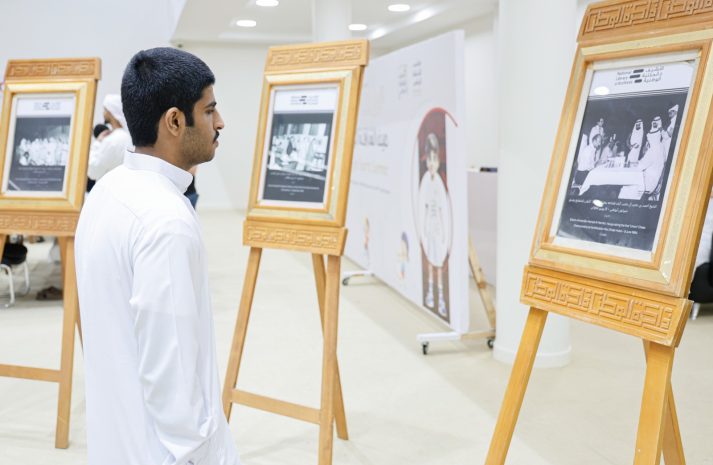
In celebration of the International Chess Day, the National Library and Archives (NLA) participated in Sharjah Cultural & Chess Club in a number of events. The NLA organized a photo exhibition documenting some aspects of chess history in the UAE, including the most significant tournaments in which the UAE has participated, photograps of champions, and their award cermonies. The exhibition also showcased photos of UAE’s involvements in numerous local, Gulf, Arab and international chess tournaments that have had a substantial impact, additionally it higlighted the UAE leaders’ receptions of participants and winners in chess tournaments and their trophies, and that reflects the leadership’s interest in developing and promoting this game.
On this occasion, Mrs. Fatima Al Mazrouei, Head of the Historical Archives Section at the National Library and Archives, presented a lecture titled “The Progress of Chess on the UAE”, in which she reviewed the history of chess worldwide and highlightes some significant events in the history of this game. She also discussed the legends associated with chess and the profounf impact of this game, which changed the path of some individuals and added important dimensions to their careers.
Al Mazrouei reviewed the history of the establishment of the The UAE Chess Federation in 1976, and its responsibility for organizing their chess competitions within the UAE most important of its clubs. She noted that that the federation is affiliated with the International Chess Federation. She spoke about the significant achievement of Saeed Ahmed Saeed, who represented the UAE and won the Youth Chess Championship in 1979 by defeating Mexico. His victory was celebrated by Sheikh Zayed bin Sultan Al Nahyan, highlighting the importance of the role of youth in building the UAE and fostering its intellectual development. The lecture shed light on the UAE’s hosting of the 27th Chess Olympiad and the key decisions, decrees and laws under which federations, associations and clubs were established since its establishment under the umbrella of the UAE Chess Federation since its inception.
It is noteworthy that the National Library and Archives organizes numerous exhibitions of historical photos during official events and national occasions to provide them with a historical dimension and enhance national awareness among the generations.
additionally, the National Library and Archives enriches the knowledge of generations through lectures presented by experts and specialists, shedding light on events, occasions and activities it participates in.
The National Library and Archives confirmed that the translation of Sheikh Zayed’s poetry into English would enhance the UAE’s image on the global cultural map.
The National Library and Archives confirmed that the translation of Sheikh Zayed’s poetry into English would enhance the UAE’s image on the global cultural map.
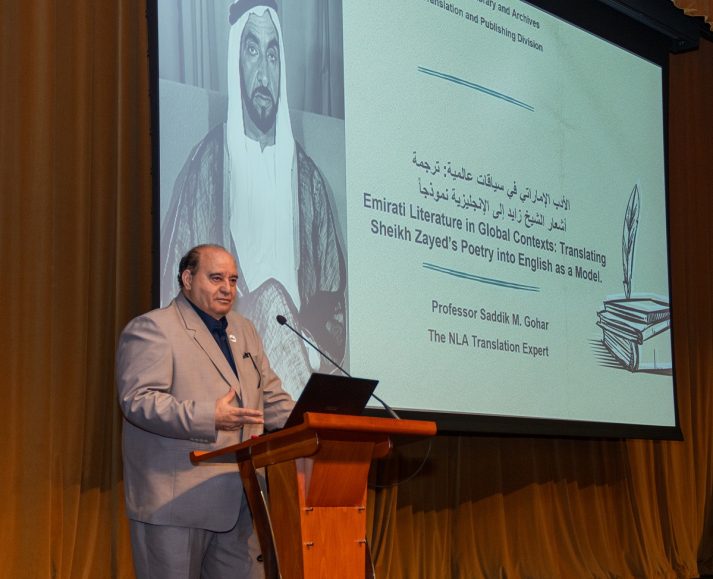
The National Library and Archives organized a lecture entitled: “Emirati Literature in Global Contexts: Translating Sheikh Zayed’s Poetry into English as a Model”. The lecture stressed the importance of translating Emirati heritage into English to enhance the image of the UAE on the global cultural map. The lecture pointed out that at the forefront of Emirati literature are the poems of the founder and builder, Sheikh Zayed bin Sultan Al Nahyan – may God rest his soul. From this standpoint, the lecture shed light on Zayed’s Nabati poetry, inspired by his exploits and noble morals, and stemming from his soul, and his yearning for glory. Apparently, Zayed’s Nabati poetry sprang from the glorious history of the UAE and its ancient cultural heritage.
The lecture, presented by Professor Saddik Gohar, the National Library and Archives translation expert, who confirmed that there are similarities between Sheikh Zayed’s poetry and the poems of major British poets. This affinity enhances the importance of the translation Sheikh Zayed’s poetry into English due to the depth of its meanings and the accuracy of its connotations. Gohar demonstrated that the translation would locate the UAE authentic popular literature in its appropriate place within global cultural contexts and on academic research platforms affiliated with historical and cultural studies. Since the Nabati poetry of Sheikh Zayed is a reflection of the Emirati oral heritage, its translation will inevitably open new horizons for critical research in the fields of oral literature and Emirati studies.
The lecture reviewed the original and authentic cultural sources of Sheikh Zayed’s poetry illustrating his learning journey, which started in the mosque school (Kuttab) at the hands of Al-Mutawa. He learned the Qur’an, the biography of the Prophet, the fundamentals of religion, and the Arabic language. On the other hand, he derived the culture of his society from his father’s gatherings, where he learned customs and traditions, listened to poetry, and excelled in memorizing and composing Nabataean poetry. This increased his closeness to the poets with whom he entered into poetic dialogues. This rich background distinguished his poems as intellectual and cultural masterpieces depicting the Emirati cultural and civilizational diversity, and reflecting his insightful vision of life in the desert, oases, and various other environments in the Emirates.
Sheikh Zayed infused his poems with a local specificity that highlights the importance of preserving heritage, pride in the cultural achievements of the Emirates, and pride in local national traditions and heritage. Sheikh Zayed’s poems express his interest in horses, camels and falcons, and reveal his early interest in environmental issues, and some of them are full of advice directed to the young generations. Most of Sheikh Zayed’s poems overflow with wisdom and aim to strengthen the ties between various segments of the Emirati society, and this is what gives his poetry distinction paving the way for its translation into English as a historical archive and literary record of local cultural heritage.
The lecture emphasized that Sheikh Zayed’s poetry highlights his courage, chivalry, and exploits that make him a role model for generations, in addition to his love for his country, his loyalty to his people, and the tremendous efforts he made throughout his life to elevate his people and nation, and take pride in national identity.
The lecture presented a number of Nabataean poems selected from the poetry of Sheikh Zayed in English translation. The lecture highlighted their similarities- in terms of the main ideas and themes in poetry, interest in the local environment, and pride in the homeland and its heritage- with the poems of the most important British poets during the Elizabethan era who were concerned with environmental issues in their poems during the seventeenth century. The lecture illustrated that this similarity gives Sheikh Zayed’s poetry a global dimension and an international reputation.
In the aftermath of attracting more than 100,000 subscribers, and broadcasting more than 500 films and visual materials the NLA YouTube channel won the Silver Trophy.
In the aftermath of attracting more than 100,000 subscribers, and broadcasting more than 500 films and visual materials the NLA YouTube channel won the Silver Trophy.
The NLA YouTube channel obtained the Silver Trophy from the YouTube management of the global Google Foundation, as the number of channel subscribers exceeded 100,000. This was due to the trust enjoyed by the NLA YouTube channel as an important reference for researchers and those interested in the history of the United Arab Emirates. The NLA YouTube channel broadcasted accurate and documented information.
Regarding this achievement, His Excellency Abdullah Majid Al Ali, the NLA Director General stated that the National Library and Archives aimed to develop, update, enrich and nourish the NLA YouTube channel constantly. Therefore, the NLA specialized channel won the Silver Trophy in record time due to careful and responsible follow-up.
His Excellency stated that the National Library and Archives implemented a systematic strategic plan that facilitated access of Internet visitors to the NLA YouTube channel. This enabled the Internet visitors to find national documentaries and videos that support the NLA institutional identity and enhance its institutional reputation.
The NLA aimed to confirm to its audience its keenness to collect, preserve and make available the nation’s memory to all the viewers and followers. His Excellency stressed that the content contained in the NLA’s YouTube channel is in the interest of the institution’s objectives, and was uploaded on the channel in a conscious manner that would attract the largest number of Internet pioneers and those searching for documented historical and accurate historical information.
His Excellency praised the efforts of those responsible for managing, nourishing and developing this channel, stressing that continuing to make these sincere efforts will enable the channel maintain its leadership and distinction, and calls for optimism in obtaining the Golden Trophy.
It is worth noting that the content of the NLA YouTube channel – which is one of the NLA’s seven social media channels-, has received interaction from the public since it revolves around the history and heritage of the United Arab Emirates, and reviews the most prominent activities of the National Library and Archives. The content of the NLA YouTube channel enhanced the NLA’s pioneering national role, and contributed to enrichment and empowerment of the knowledge societies.

Suroor bin Mohammed Reviews the National Library and Archives’ Strategic Plan and Praises Its Role in Preserving the Memory of the Nation
Suroor bin Mohammed Reviews the National Library and Archives’ Strategic Plan and Praises Its
Role in Preserving the Memory of the Nation
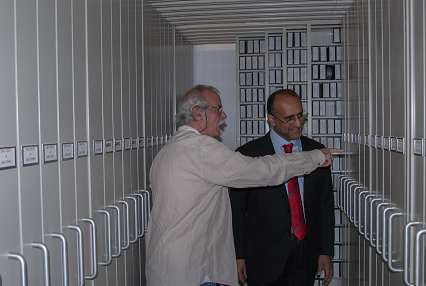
His Highness Sheikh Surour bin Mohammed Al Nahyan visited the National Library and Archives, where he was received by His Excellency Hamad bin Abdul Rahman Al Midfa, Chairman of the Board of Directors. His Highness toured Sheikh Surour Hall and reviewed the progress of its preparation. This hall chronicles a significant phase in the history of the UAE during its building and founding stages. It also presents documentary films that highlight aspects of his march alongside the founder and builder, Sheikh Zayed bin Sultan Al Nahyan. His Highness gained the trust of Sheikh Zayed since he assumed the rule of the Emirate of Abu Dhabi.
His Highness and his accompanying delegation listened to a detailed explanation from His Excellency Abdullah Majed Al Ali, Director-General of the National Library and Archives, about the design and contents of the hall, the most important achievements of the National Library and Archives, its strategic plan which extends to 2032, and the most prominent future projects and initiatives.
The visit included a tour of Sheikh Zayed bin Sultan Hall, in which His Highness was accompanied by His Excellency Zaki Nusseibeh, the Cultural Advisor to His Highness the President of the UAE, and Chancellor of the United Arab Emirates University. This hall embraces the past, documents the present, and anticipates the future by utilizing the latest innovative technologies and display methods to provide the visitors with the information that enhance the belonging to the homeland and the loyalty to the wise leadership. It also impresses visitors with the progress, development, and prosperity the UAE had achieved.
His Highness Sheikh Surour bin Mohammed Al Nahyan praised the role played by the National Library and Archives in documenting the memory of the nation, and in making it accessible, and preserving it for the future generations.
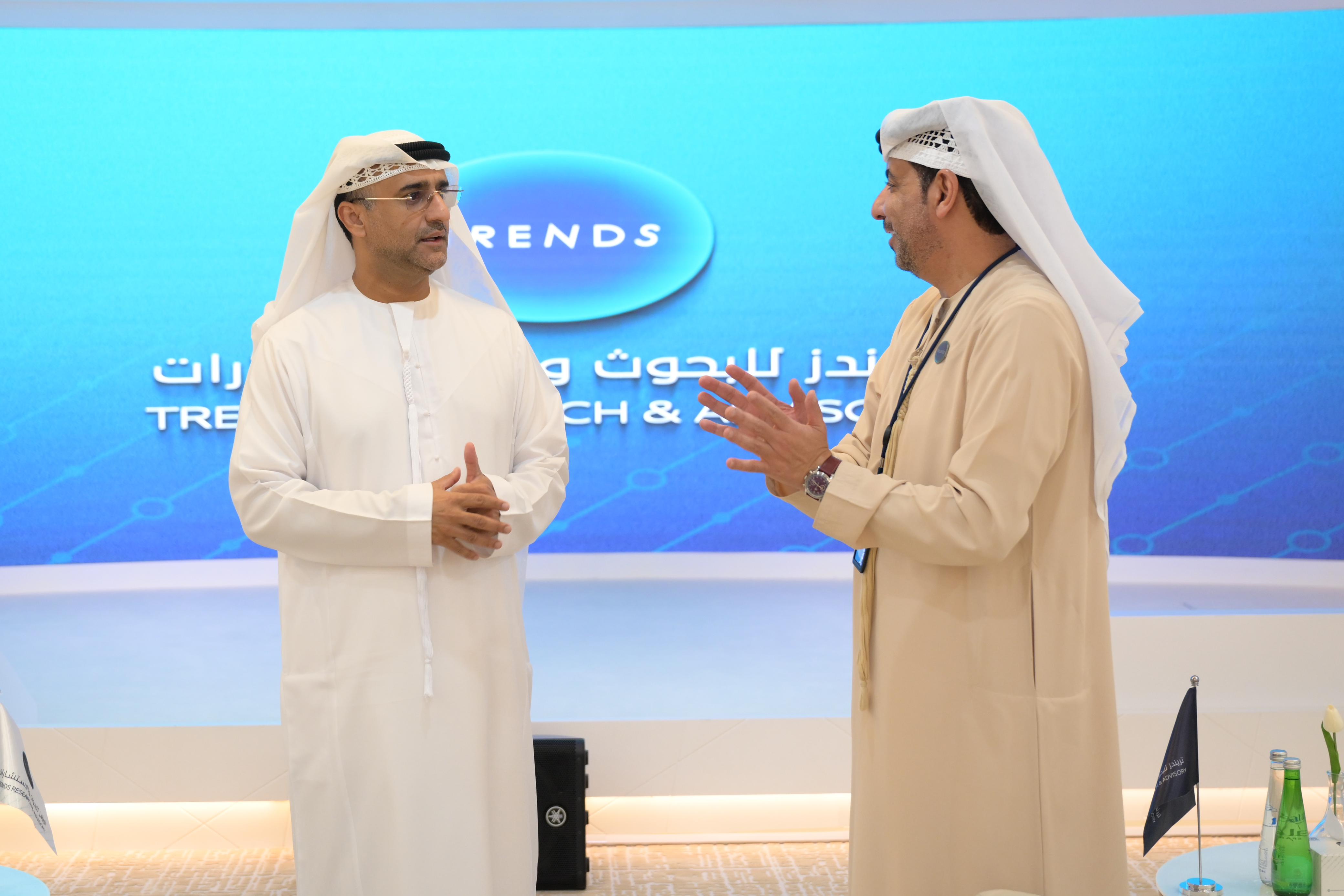
TRENDS hosts the Director General of the National Library and Archives in a conversation session on the role of libraries in scientific research
TRENDS hosts the Director General of the National Library and Archives in a conversation session on the role of libraries in scientific research
In a distinguished conversation, TRENDS Research and Advisory hosted His Excellency Abdullah Majid Al Ali, Director General of the National Library and Archives. The session focused on the importance of libraries, their pivotal role in supporting scientific research, and ways to enhance cooperation between think tanks and national libraries to serve researchers and society.
During the session, participants stressed the role of modern libraries in promoting the culture of scientific research and explained the challenges faced by libraries in the digital age and the new opportunities offered by modern technology to serve researchers and readers.
After the conversation session, Dr. Abdullah Majed toured TRENDS’ departments and was briefed on the various services provided by TRENDS to researchers and the community, including TRENDS’ library, which houses a wide collection of books, periodicals and electronic materials in various fields; TRENDS’ Smart Lab, which constitutes an incubating environment for creative ideas and through which designs, videos and infographics are prepared; the Conference Hall, which provides a convenient space for holding conferences, symposiums and research events; in addition to a number of TRENDS’ sectors, including the Research Sector, which boasts a team of researchers who are specialized in various fields and conduct research and studies on issues of strategic importance.
It is worth mentioning that an agreement was signed between TRENDS and the National Library and Archives aimed at enhancing prospects for cooperation between the two sides in the scientific and research fields, sharing expertise and successful experiences, exchanging scientific publications, and conducting events in areas of common interest with a view to achieving the goals envisaged in the strategies of both sides.

The National Library and Archives, Representing the UAE, Signs A Memorandum of Understanding (MoU) With the ISSN International Centre
International Standard Serial Number (ISSN) Centre Announces UAE’s Membership
In coordination and support by the UAE National Commission for Education, Culture, and Science
The National Library and Archives, Representing the UAE, Signs
A Memorandum of Understanding (MoU) With the ISSN International Centre
The International Standard Serial Number (ISSN) Centre announced the UAE’s Membership, represented by the National Library and Archives.
The National Library and Archives (NLA) has signed a Memorandum of Understanding (MoU) with the ISSN International Centre, part of the United Nations Educational, Scientific and Cultural Organization (UNESCO). This MoU confirms the UAE’s Membership in the ISSN International Centre, represented by the NLA, supported by the UAE National Commission for Education, Culture, and Science.
The MoU was signed virtually by His Excellency Abdulla Majed Al Ali, Director General of the NLA, and Dr. Gaelle Bequet, Director of the ISSN International Centre in Paris.
On this occasion, His Excellency the Director-General expressed his happiness with the signing of the memorandum, considering this event as support for the role played by the National Library and Archives in preserving the memory of the nation and its contribution to building and enriching knowledge societies. By this agreement, the National Library and Archives becomes the authorized entity to assign each periodical a unique number that does not repeat or resemble any other periodical. This number distinguishes the periodical from others and is used by publishing authorities.
His Excellency said: “Assigning the international standard serial number (ISSN) to the periodicals issued in the United Arab Emirates will ensure the regulation of intellectual production in the country. It will help the National Library and Archives to promote this cultural and intellectual output, and contribute to making researchers, interested parties, and beneficiaries inside and outside the UAE aware of the content of these periodicals. The benefits are not limited to researchers and beneficiaries of the periodicals’ content; they also extend to the periodicals themselves, which will gain more widespread recognition and increased demand.”
He added: “Cataloging both printed and electronic periodicals will enable their cultural and intellectual content to be indexed and included in databases. This content will primarily highlights the establishment of the United Arab Emirates, its march of progress, development, and prosperity under our wise leadership”.
Dr. Gaelle Piquet, Director of the International Standard Numbering Center, thanked the National Library and Archives and expressed her optimism for further cooperation between the two parties. She emphasized that the Memorandum of Understanding marks a milestone in the relationship between the National Library and Archives and the ISSN Centre. It stands as a testament to their shared vision and commitment, serving as a starting point for diligent work by all concerned parties. This collaboration underscores their aspiration for excellence and dedication to achieving satisfactory results in the cataloging and indexing of periodicals published in the UAE.
The UAE National Commission for Education, Culture, and Science played a crucial role in submitting the dossier to UNESCO and nominating the NLA. The Commission provided information about the NLA’s work and status and explained the significance of entrusting the NLA with this responsibility for its pioneering role in advancing the local cultural scene.
This effort by the commission reflects the Ministry of Culture’s keen commitment to achieving the vision of the wise leadership, that aims to integrate the performance among the various government agencies and institutions and the cooperation with international organizations. This enhances competitiveness and fulfills the national agenda and help achieve the goals of sustainable development.
The NLA will inform its customers about the commencement of the International Standard Serial Number (ISSN) process after preparing the requirements for activating the UAE’s International Standard Serial Number Center.