
The National Library and Archives Participates with a Paper and a Poster in the Conference of the American Oral History Association
The National Library and Archives Participates with a Paper and a Poster in the Conference of the American Oral History Association
The National Library and Archives participated in the Annual conference of the American Oral History Association, held in Cincinnati, Ohio. Dr. Aisha Bilkhair presented a paper titled: “Oral History: Redefining and Documenting the Past: The Experience of the UAE as a Model”. The paper addressed the methodology employed in documenting and recording oral history in the United Arab Emirates. Dr. Aisha reviewed the collection practices applied in this type of documentation, emphasizing the importance of recognizing elements that impart a unique character to the UAE society—elements not typically found in field collection methods in other parts of the world. She highlighted how human relationships in the UAE are deeply rooted in cultural and social heritage, with narrators insisting on recounting their history and details with precision and authenticity.
Dr. Aisha also emphasized the importance of the connection between UAE society—both citizens and resident expatriates to the nation’s authentic cultural heritage. This heritage encompasses values, customs, and principles that sustain the national identity. She explained how this connection fosters a distinctive identity for the people of the UAE and creates a clear influence on expatriates, who view the UAE as a source of inspiration and an extension of civilization and culture, deserving of preservation with pride and honor.
Dr. Aisha Bilkhair emphasized that the National Library and Archives’ permanent membership in this esteemed association positions the UAE at the forefront of nations participating annually. This contributes to shedding light on the unique nature of Emirati society and its rich heritage, attracting researchers and academics to explore the nation’s achievements and encouraging academic studies in this field. Oral history is one of the key pillars for understanding the evolution of society and its culture over time. Through it, the stories and memories of senior individuals, encompassing the stages of the nation’s development, as well as its tales and challenges, are documented to serve as a guiding beacon for future generations.
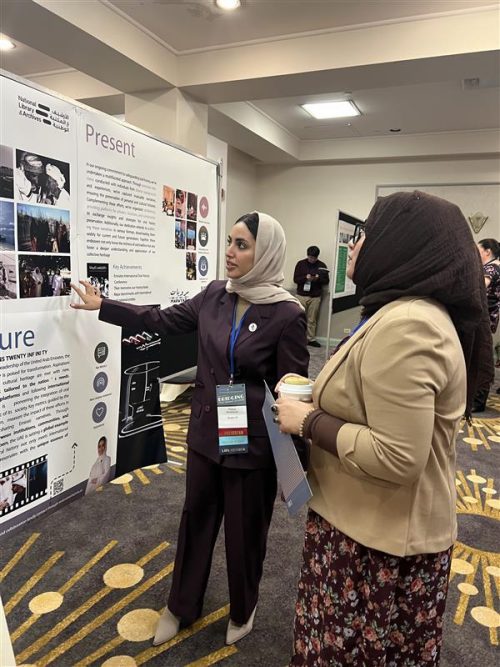
Madya Al-Mehairbi, the Researcher in Oral History, also participated by presenting a poster titled: “The Bridge of the Past, Present, and Future: The Model of the National Library and Archives.” In her presentation, she provided an overview of oral history in the National Library and Archives, highlighting the importance of preserving oral history as an essential part of the UAE’s national and cultural identity. She explained the role of the National Library and Archives in collecting and documenting oral narratives, which are considered a treasure from which the generations to come will draw knowledge. The researcher also discussed the importance of this type of documentation in conveying human experiences and traditional knowledge to future generations, thereby enhancing a deep understanding of Emirati identity and its core values.
The poster received widespread praise from the visitors of the exhibition, who commended the efforts of the National Library and Archives in collecting and preserving oral history, as well as in promoting the culture of the UAE and the nation’s story. A large number of conference participants visited the display and expressed their happiness with what they saw and learned about the history and heritage of the UAE.
The National Library and Archives devotes one of the seminars in its cultural season 2024 to raising awareness about the significance of smart sustainable cities.
As part of its interest in artificial intelligence and its uses,
The National Library and Archives devotes one of the seminars in its cultural season 2024 to raising awareness about the significance of smart sustainable cities.
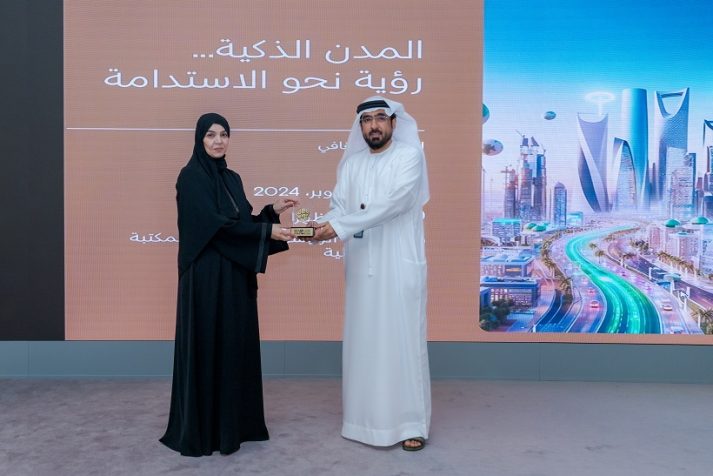
The National Library and Archives hosted a seminar titled “Smart Cities: A Vision for Sustainability” within its cultural season 2024. The focus was on how smart sustainable cities utilize information and communication technology to enhance urban living, elevate the quality of life, and address the needs of both present and future generations. The discussion emphasized the crucial role of community involvement in the age of smart cities.
The National Library and Archives dedicated this seminar to advocate for the concept of sustainability, particularly as the United Arab Emirates embraces innovative concepts to position itself among leading nations in developing smart sustainable cities. The UAE is committed to planning and ensuring long-term quality of life while making substantial efforts to forge a sustainable future through a holistic strategy that protects the environment and cultural heritage.
The seminar, featuring a lecture by Ms. Dababa Saeed Nasser Al Romaithi, highlighted the essential function of smart cities in discovering innovative and sustainable solutions to enhance life quality and resource management. It showcased how technologies like the Internet of Things (IoT) and artificial intelligence can improve public services. It also underscored that the effectiveness of smart cities hinges on community involvement, encouraging citizens to engage in decision-making and proposal submissions.
The seminar also explored the connection between community involvement and technological advancement in smart cities. It defined community participation in this context, clarified technology’s role in facilitating such participation, reviewed the challenges it encounters, and offered recommendations to boost future involvement, all of which support sustainable development.
Furthermore, the seminar outlined community participation as individuals’ contributions to decisions impacting their lives and detailed various types, channels, and methods of engagement in smart cities. They include digital platforms, social media, meetings, local Majlis, online surveys and consultations, community centres, public forums, electronic voting, grassroots initiatives, open data, and interactive mapping.
Ms. Al-Romaithi also presented technologies that bolster community participation in smart cities, identifying them as artificial intelligence, the Internet of Things (IoT), virtual reality, and augmented reality.
The seminar concluded by reviewing the primary challenges to community involvement in the era of smart cities and recommendations that could enhance this engagement. It emphasized that smart cities present a tremendous opportunity to improve life quality through advanced technologies, but their success relies on active citizen participation in decision-making and resource management. Therefore, it is imperative for citizens to be integral to this digital transition to ensure sustainability and enhance the success of smart cities, thereby contributing to a sustainable vision that fulfils the needs of all and enriches urban living.
The National Library and Archives Invests in Artificial Intelligence and its Applications in Line with its Long-Term Strategy
Holding the first meeting of the Artificial Intelligence and Advanced Technology Committee,
The National Library and Archives Invests in Artificial Intelligence and its Applications in Line with its Long-Term Strategy
At its first meeting, the Artificial Intelligence and Advanced Technology Committee at the National Library and Archives, headed by His Excellency Abdullah Majed Al Ali, Director General of the NLA, discussed the key objectives and future plans for integrating AI technologies into the NLA’s work. They also emphasized the importance of policy guidance and strategies related to investments in AI and emerging technologies.
On the importance of AI and its applications in archival work, His Excellency Abdullah Majed Al Ali mentioned that the NLA is eager to advance archival practices through scientific approaches and cutting-edge technologies, drawing upon the most advanced techniques and global best practices. He emphasized that this vision encourages the adoption of a proactive methodology in developing advanced digital infrastructure to accelerate progress. He added that the NLA is committed to embracing AI solutions and applications that align with its long-term strategic objectives up to 2031, which encompass enhancing innovations and shaping future AI courses. His Excellency highlighted that this involves discovering innovate solutions to strengthen leadership, particularly as the UAE progresses towards its Centennial anniversary led by our wise leadership that aim at elevating the UAE’s status to the forefront globally.
Mr. Hamad Al Mutairi, Director of the Archives Department and Vice President of the Committee, emphasized that the challenge of managing the vast volume of digital content, along with the rapid development of technologies, urges us to constantly seek innovative solutions. In this context, we anticipate investing in AI and its application within our archival work as well as in the assimilation, management and accessibility of the memory of the nation. Furthermore, there is a strong recommendation for the application of AI technologies in the development of digital archives, which are designed to accommodate rapid changes, and in the creation of innovative and efficient tools that will facilitate the access and analysis of information for both institutions and researchers.
During the course of the meeting, several presentations were delivered, underscoring the critical importance of integrating AI with archival work at the National Library and Archives. These presentations also outlined strategies for the integration of these technologies, aiming to enhance work efficiency and improve the quality of the provided services.
The meeting concluded with an agreement to intensify efforts and foster the integration of initiatives and projects for further advancement of the NLA. This is in harmony with the committee’s objectives of enhancing competency, innovation, and adopting advanced technology in solutions and systems
The National Library and Archives launches the 3rd Emirates International Oral History Conference attracting a significant official and public audience.
Exploring the enigma of pearls and emphasizing the importance of intergenerational learning and exchanges, the link between national identity, heritage and traditional music, and global trends for sustainable collection of oral collection
The National Library and Archives launches the 3rd Emirates International Oral History Conference attracting a significant official and public audience.
The activities of 3rd Emirates International Oral History Conference kicked off at the headquarters of the National Library and Archives, which was held under the theme “Their memory is our history, Sustainable Trends in Oral History & Knowledge Preservation”. It demonstrated that oral history holds equal significance to written history, as the recollections of its narrators preserve events, circumstances, and stories that might have been overlooked by historians in written records.
His Excellency Abdullah Majed Al Ali, Director General of the National Library and Archives, opened the conference with a speech emphasizing that the National Library and Archives will continue to serve as a stronghold for preserving and documenting heritage. He assured that the NLA’s efforts will persist in fostering national identity and enhancing cultural memory.
His Excellency emphasized that the significance of oral narration lies in its role in fostering conversations with history, as it serves as a vibrant conduit linking present-day generations with the experiences of their ancestors, enhancing their comprehension of their societies’ traits and origins. He further noted that this is evident in the way we appreciate the audio and video recordings of human treasures captured by photographers and videographers, and the living accounts of veterans who experienced events that left permanent marks on our history. He highlighted that these stories are more than just recollections; they act as a driving force that encourages us to emulate the sacrifices of our ancestors and to honour their legacies, thereby motivating us to safeguard our collective memory and the essence of our genuine society.
His Excellency hoped that experts, researchers and participants would have fruitful times in sharing knowledge and experiences. He also hoped that the conference events would offer an environment where we can find motivation for developing new methods to safeguard human heritage and explore creative approaches to document and archive our unique narratives and current events. He added that this would serve as a guiding light for future generations, enabling them to gain a deeper understanding of the human story and its trajectory across history.
On behalf of Sheikha Dr. Shamma bint Mohammed bin Khalid Al Nahyan, Chairperson of the Board of Directors of Sheikh Mohammed bin Khalid Al Nahyan Cultural Centre, Her Excellency Maryam Hamad Al Shamsi, the centre’s Secretary General, delivered the guest of honour speech. She highlighted that our history has been passed down through generations via oral narratives, emphasizing that oral history plays a crucial role in preserving our culture, heritage, and historical events. She also noted that these stories, tales and myths that are transmitted orally are considered the main framework for the cultural and value stock of the Emirati national identity.
She pointed out that due to progress in technology and the different methods now accessible for recording history scientifically and culturally, the significance of oral history in recording current events has declined. However, it still plays a crucial role in recording historical events. By archiving our oral history in such a protective way, we ensure that our past and memories are preserved for future generations.
Sheikha Dr. Shamma bint Mohammed bin Khalid Al Nahyan’s speech touched on the topics of the conference that delve into the human value in our history, particularly highlighting the significance of pearls as a lens through which we can view periods of both prosperity and hardship in Emirati society. Pearls were not merely a source of income for our ancestors but rather a symbol of resilience and the capacity to overcome life’s challenges.
She highlighted the significance of folklore and how deeply it is intertwined with various elements of our national heritage. She also emphasized the role of cultural heritage as a fundamental component in shaping the contemporary Emirati identity, ensuring that our customs and traditions continue to resonate with the next generations.
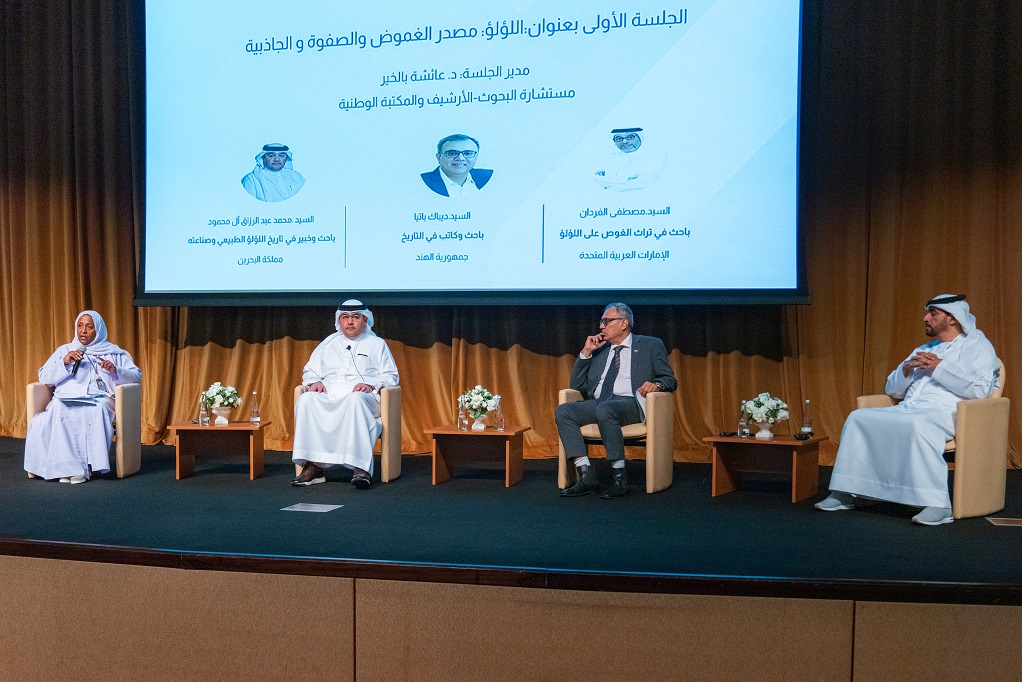
Following that, the first session of the 3rd Emirates International Conference on Oral History commenced, entitled: Pearls: Enigmatic, Eclectic and Alluring. It was moderated by Dr. Aisha Belkhair, NLA’s Research Advisor and the Conference General Coordinator. She highlighted the historical and economic significance of pearls, their role in society and human life, and their influence on mainstream culture. The first speaker, Mr. Mustafa Al-Fardan explored pearls as a source of enigma and and the search for knowledge and touched on material landmarks and heritage literature. He shed light on the origins of diving and the epic of Gilgamesh, then moved on to the depiction of diving in pre-Islamic and Umayyad poetry, focusing on the most celebrated tales associated with the diving trade. He ended his talk by quoting His Highness Sheikh Mohammed bin Rashid, Vice President and Prime Minister of the UAE, and Ruler of Dubai: “We thank the challenges we learned from; we thank the circumstances that made us; we thank the past that brought us to where we are.”
Next, Mr. Deepak Bhatia delved into significant elements of his family’s history that was renowned for its involvement in the pearl trade and industry. He bolstered his presentation with numerous old and unique photographs of his grandfather and his partners in this field. Bhatia illuminated the different forms of pearls, such as the moon shape and teardrop-shaped pearls. He also shared insights from the book he authored, which details the history of pearls and the beginnings of the pearl trade.
The session wrapped up with Mr. Mohamed Abdul Razzaq Al Mahmoud from Bahrain, from the Kingdom of Bahrain. He spoke about the historical interest of the GCC countries and Bahrain in pearl diving, as well as the practices of his grandfather and father in the pearl trade, and his own deep-seated interest in the profession. He shared amusing anecdotes about pearls, the search for them, pearl trade and its significance, leaving a lasting impression on the audience about the profession of pearl diving, suggesting it was one that historically brought the GCC countries together. He also shed light on the use of pearls as adornments for men in rings, buttons for clothing, and as embellishments for weapons such as swords and daggers.
The audience’s engagement with the topic of the first session was clear through the numerous questions and inquiries concerning pearls and their significance.
The second session titled “Intergenerational Learning and Exchanges” was chaired by Lauren Kata, Assistant Academic Librarian for Archives and Special Collections at NYU Abu Dhabi. This session featured talks by Mark Upton from the UK, Aya Al Hira from the UAE, and Hagar Faisal Amer from Egypt.
The third session titled ” Traditional Music: National Identity and Heritage” was moderated by Mr. Hamid Abdullah Al-Muzaini, and featured talks by Dr. Faisal Ibrahim Al-Tamimi from Qatar, Azhar Kubba from Iraq, and Rosa Maria Araujo from Brazil.
The fourth session focused on “Sustainability Trends: A View from Three Countries” and was moderated by Ms. Maitha Al Zaabi, Head of the Department of Oral History at the National Library and Archives. It included presentations by Dr. Mubarak Ben Belkasem Jaafari from Algeria, Professor Alistair Thompson from Australia, and Adrian Cain Darrow from the United States of America.
Finally, the conference wrapped up with the recommendations and a word of thanks to the participants and attendees.
The National Library and Archives Organizes Activities to Enrich Knowledge Societies
On oral history, libraries and cultural affairs,
The National Library and Archives Organizes Activities to Enrich Knowledge Societies
The National Library and Archives has concluded the preparations for the Emirates International Oral History Conference. It has also undertaken the requisite preparations for the Conference of Directors of National Libraries in Asia and Oceania (CDNLAO) Meeting, in conjunction with the Dubai International Library Conference 2024 (DILC), hosted by the Mohammed Bin Rashid Library. Additionally, it has been engaged in preparations for a workshop focusing on the role of the National Library and Archives within the cultural system.
These activities align with the NLA’s vision and mission, which aim to inspire, enable and enrich knowledge societies while preserving documentary heritage.
On November 11, 2024, the NLA is organizing the third edition of the Emirates International Oral History Conference at its headquarters, under the theme “Their Memory Our History: Methods of Sustainability and Knowledge Preservation in Oral History”. The conference is anticipated to bring together participants from eleven different countries around the world. It aims to establish strategic partnership that promotes integration and cooperation with Arab and international institutions and entities. Further, it offers new opportunities for communication, exchanging expertise and learning from successful experiences. It will also delve into the exploration of the most recent technologies, practices, publications, and methodologies in the realm of oral history, alongside effective preservation techniques. The conference topics are “Pearls: Enigmatic, Eclectic and Alluring”, “Traditional Music: National Identity and Heritage”, “Intergenerational Learning and Exchanges” and “Sustainability Trends: A View from Three Countries”.
On the other hand, the NLA welcomes participants to join the 30th Conference of Directors of National Libraries in Asia and Oceania (CDNLAO), which will be held on November 16th at the Mohammed Bin Rashid Library in Dubai. The conference will address a variety of subjects, such as the contribution of libraries to sustainable development objectives, deliberations and presentations from three unique national libraries globally, and an examination of their distinguished experiences. Furthermore, the conference will focus on green libraries, environmental sustainability, and the role of libraries in promoting societal knowledge on sustainability.
As part of its activities to enrich knowledge societies, the NLA is set to organize a workshop titled “The Role of the National Library and Archives in the Cultural System”, on November 19th. The NLA held a series of preparatory meetings with relevant entities ahead of the workshop which aims to develop final charters for joint cultural initiatives. It is expected to discuss the relationship between documentary heritage and cultural heritage, focus on the cultural and societal role of the NLA, and align the NLA’s role with the vision of the Ministry of Culture, as well as the UAE Centennial 2071.
The workshop will explore and identify opportunities for collaboration with cultural, educational, and societal institutions across the nation. Furthermore, it will scrutinize potential partnerships with individuals who have a keen interest in history, heritage, culture, art, and literature, encompassing artists, writers, authors, and narrators. The objective is to leverage the experiences, resources, platforms, and knowledge provided by these institutions to enhance the cultural sector of the country. Moreover, the workshop seeks to bolster societal engagement in the preservation of cultural heritage through the development of cultural initiatives that underscore the NLA’s pivotal role, adhering to specific criteria. It will also promote innovation in cultural heritage projects and discuss the challenges of implementing sustainable cultural initiatives.
The National Library and Archives takes part in the Sharjah International Book Fair 2024 with an array of events and activities
Showcasing its latest works and enhancing its pavilion with rare publications and issues on the history of book fairs in the nation,
The National Library and Archives takes part in the Sharjah International Book Fair 2024 with an array of events and activities
The National Library and Archives participates in the forty-third edition of the Sharjah International Book Fair (SIBF), a significant event for local, Arab, and global cultural enthusiasts, readers and creators of cultural and publishing content. The SIBF is held under the theme “It Starts with a Book”.
The NLA’s pavilion at the SIBF showcases its latest and most impressive works, featuring a distinguished book titled “National Identity in the United Arab Emirates: Between the Uniqueness of Constants and Values and the Universality of Standards” by His Excellency Prof. Dr. Jamal Sanad Al-Suwaidi, Vice Chairman of the Board of Trustees of the Emirates Centre for Strategic Studies and Research. The NLA pavilion was also the stage for the launch of “The First Barrel of Wealth” by Dr. Salwa Al Nuaimi and “UAE-Morocco Relations” by His Excellency Dr. Saeed Al Ketbi, the latter aligns with the Sharjah Book Authority’s selection of Morocco as the “Guest of Honor” for this year’s edition. Additionally, the pavilion showcased important works on the history and heritage of the UAE, the biographies of notable leaders who have contributed to the state’s establishment and prosperity. It has sections dedicated to the refereed scientific journal Liwa and the quarterly magazine Al-Maqtaa.
H.E. Abdullah Majid Al Ali, Director General of the National Library and Archives, stated, “We have consistently participated in the Sharjah International Book Fair, recognizing it as a pivotal nexus for the convergence of global cultures. In alignment with our mission to enrich and empower Knowledge societies, we are keen to facilitate the exchange of knowledge and culture. Furthermore, we actively engage in a diverse array of events that appeal to students and researchers.”
He added, “Our participation in this particular edition of the Sharjah International Book Fair is distinguished by the fact that the National Library and Archives has evolved from merely serving as an incubator for historical documents and records to becoming a pivotal partner in the cultural content industry. We are eager to enrich the National Library’s collections with specialized publications that are exclusively available at this international event.”
His Excellency extended an invitation to all SIBF visitors and participants to explore the NLA’s pavilion, where they could discover the diverse and revitalized events that cater to various intellectual segments.
To celebrate the 50th year since the first book fair was held in Abu Dhabi in 1974, the NLA’s pavilion at the SIBF’s 2024 has allocated a section to chronicle the history of book fairs in Abu Dhabi, Sharjah, and Al Ain, highlighting their significant role in advancing knowledge and fostering community culture. For this purpose, the NLA utilized archival issues of the Al-Ittihad newspaper, which covered the first editions of the aforementioned book fairs.
The NLA’s pavilion includes a special section dedicated to the unwavering support it receives from the wise leadership. This section features photographs of the esteemed leaders of the United Arab Emirates as they peruse the NLA’s publications.
Additionally, the NLA’s pavilion included a special section for its rare book collection since the establishment of the Documents and Research Bureau (currently, the National Library and Archives). These notable publications include “Two Glorious Years in the History of the Emirate of Abu Dhabi,” published in 1968, and the first NLA’s publication following the establishment of the Union, titled “The United Arab Emirates: A Historical, Geographical and Cultural Study to Introduce its Emirates and Their Achievements”, published in 1972.
The participation of the National Library and Archives in the Sharjah International Book Festival 2024 encompasses a range of educational activities for students and various other engaging events.
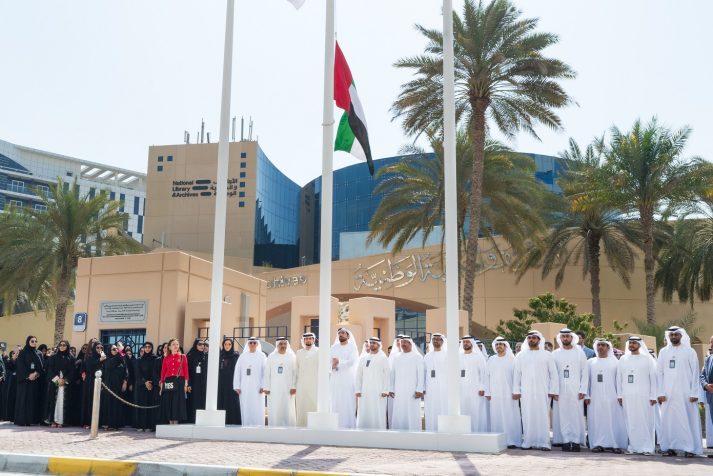
The National Library and Archives celebrates Flag Day and pledges to continue its path, guided by the insightful leadership
The National Library and Archives celebrates Flag Day and pledges to continue its path, guided by the insightful leadership
The National Library and Archives honoured Flag Day by hoisting the flag atop its headquarters and the Centre for Preservation and Restoration, as it symbolizes the United Arab Emirates and is a source of pride for all.
In the presence of all staff, the flag was ceremoniously raised, signifying unity and national cohesion. On this special day, the NLA affirmed that Flag Day is a cherished event that fosters unity, fraternity, and generosity, and encapsulates the spirit of the union, coexistence, and peace among the populace. It also reinforces the UAE’s reputation as a model of tolerance and elevates the flag as a symbol of ambition, glory, peace, and prosperity.
The National Library and Archives promised to the wise leadership to continue meaningful national endeavours under the lofty banner of our homeland. Furthermore, the NLA aims to achieve the objectives outlined in their strategic plan, extending to the year 2032. The NLA’s mission is to further enrich knowledge societies and maintain its status as a unique cultural landmark, all in alignment with the insightful guidance of the leadership to position the United Arab Emirates as one of the leading countries in the developed world.
The NLA elaborated that the flag of the United Arab Emirates will continue to inspire pride in our principles and values and in the achievements of our nation at all levels. The NLA emphasized the flag’s role in promoting loyalty and a sense of belonging to our homeland, and in safeguarding our national identity.

The National Library and Archives Continues its Preparations for the Fifth Edition of the International Translation Conference
Defined the Themes of the Upcoming Edition of the Conference, to be Held at its Headquarters Next April
The National Library and Archives Continues its Preparations for the Fifth Edition of the International Translation Conference
The National Library and Archives (NLA) is advancing its preparations for the fifth International Translation Conference, scheduled for April 15-16, under the title: “Translation in New Contexts: The Role of the Translator in the Era of Artificial Intelligence”. The NLA has extended an invitation for interested participants to submit their research papers to the organizing committee by early February 2025.
With this fifth edition of the International Translation Conference, hosted at its headquarters, the NLA seeks to align with rapid global developments in artificial intelligence. The NLA’s dedication to this conference reflects its commitment to building on scientific outcomes achievements of the previous four editions.
Regarding the fifth edition of the International Translation Conference, His Excellency Abdulla Majed Al Ali, Director General of the NLA, stated: “the National Library and Archives places significant emphasis on artificial intelligence at this stage, and we have paved the way for its applications and systems to be harnessed within translation as Artificial Intelligence (AI) stands at the forefront of cutting-edge technology and innovation”.
His Excellency emphasized that the translation’s role in bridging civilizations and cultures alongside the efforts by UAE authorities under the wise leadership’s guidance, drives the NLA to contribute meaningfully to this field. This approach aligns with and enhances the efforts of other institutions, aiming to elevate the quality of both electronic and traditional translation.
His Excellency invited translators, specialists, experts, scholars, and researchers in various fields of translation to participate with academic papers reflecting the conference’s themes.
Mr. Hamad Al Hamiri, Director of the Research and Knowledge Services Department at the National Library and Archives and Chair of the Conference Organizing Committee, highlighted that this fifth edition combines professional and technical elements in translation, in light of technological advancements impacting societies worldwide. This approach aligns with the UAE’s commitment to embracing the latest scientific and technological advancements.
Al Hamiri revealed the ten main themes that will shape the research and discussions at the fifth International Translation Conference hosted by the NLA. These themes include:
1. The role of artificial intelligence in the fields of translation, interpreting, and conference translation.
2. Applications of artificial intelligence and its impact on translation and the intercultural dialogue.
3. The Use of artificial intelligence techniques in translation for people of determination.
4. The future of the translation and interpreting profession in the era of artificial intelligence.
5. Remote simultaneous translation with the help of artificial intelligence applications.
6. Literary translation practices using artificial intelligence techniques.
7. Developing translation studies curricula in universities in the era of artificial intelligence.
8. The Advantages and disadvantages of using artificial intelligence in translating multidisciplinary texts.
9. The validity of using artificial intelligence applications in translating popular culture terms and colloquial dialects.
10. The use of artificial intelligence in translating films and television series.
The Organizing Committee Chair has requested that individuals wishing to participate submit their full research papers (7,000–15,000 words), free of grammatical and linguistic errors, and documented with references. Participants should use footnotes rather than endnotes. Authors are also asked to include a brief CV (200–300 words) and to send these documents by early February 2025 to the email address: NATC@nla.ae.
Al Hamiri emphasized that all updates regarding conference participation and attendance will be communicated by the National Library and Archives through its social media platforms.

The National Library and Archives participates in the Records and Information Management Professionals Australasia (RIMPA) Live Convention 2024
Enriching the conference with its experience on oral history in the United Arab Emirates, and its orientation towards artificial intelligence in data management,
The National Library and Archives participated along with a large number of leading institutions in the annual Records and Information Management Professionals Australasia (RIMPA) Live Convention. This year’s event, themed “I am the Next Wave, Leading the Future,” focused on the future of information management. It highlighted the significance of utilizing artificial intelligence in information management, governance, and the critical role of information as a strategic resource and foundation of the knowledge economy.
Dr. Aisha Belkhair, a Research Advisor at the National Library and Archives, delivered a lecture titled “Oral History in the United Arab Emirates: Elements of Identity” at the convention. In her talk, she highlighted the significance of the NLA’s contributions to oral history and document management.
Regarding her participation in this event, Dr. Aisha Belkhair said, “Our dedication to bolstering the NLA’s standing and improving its institutional image led me to participate in this global conference. It was an opportunity to learn about the latest technological advancements in managing vast amounts of data and utilizing artificial intelligence for secure and efficient information storage and management.”
She continued: Given that data and documents are crucial strategic assets, the conference explored the ways in which they can generate positive returns for nations and societies through efficient management. The participants emphasized that the vast data and detailed information that emerge in millions of copies are equally valuable as oil, gold, or uranium if they are properly classified, preserved, and made accessible, since they form the foundation for the knowledge economy.
The Research Advisor noted that the National Library and Archives was the sole Arab representative at the conference, which took place at the Convention Centre in Adelaide, capital of South Australia. This event attracted over 500 attendees, including experts, specialists, and individuals keen on data and information management globally. The conference covered a wide range of critical topics related to the preservation and accessibility of information. It addressed challenges and future visions in this area, as well as various subjects such as information governance, policies, procedures, and arbitration documents essential for organizations. Additionally, it explored the ethical aspects of artificial intelligence, the preservation of documents through artificial intelligence and machine learning, inter alia.
The representative from the National Library and Archives (NLA) took part in a discussion session organized by the convention management, focusing on the theme of “How to excel in our field from a unique perspective,” during which Dr. Aisha Belkhair underscored the NLA’s interest in safeguarding and managing documents through the use of artificial intelligence to aid in their cataloguing, examination, and accessibility. Dr. Aisha Belkhair made an impact on the conference by sharing the NLA’s expertise and the significant contribution of national records in enhancing our comprehension of history and predicting future trends.
Additionally, the National Library and Archives took part in a brainstorming session aimed at exploring future opportunities for engagement and educational initiatives in the UAE. In the final session titled “Global Perspectives and Challenges: A Worldwide Approach to Shaping the Future,” Dr. Aisha Belkhair emphasized the need for collaboration with an international committee that spearheads the future by tackling the modern challenges encountered by emerging professionals in records management.
The National Library and Archives delves into the past and documents significant milestones in the history and heritage of the UAE in its refereed historical journal
The 31st issue of Liwa highlights the importance of coins and archaeological artifacts, tracks the Taona Case, and traces horses in Emirati poetry,
The National Library and Archives delves into the past and documents significant milestones in the history and heritage of the UAE in its refereed historical journal
The National Library and Archives has released a fresh issue of the refereed historical journal, Liwa. This issue is loaded with topics concerning the history and heritage of the UAE, the Arabian Gulf region, and the Arabian Peninsula. The latest issue of Liwa journal features a broad spectrum of research and refereed studies by experts and specialists in history and heritage, providing scholars and researchers with dependable sources.
The new issue begins with the paper titled “The Application of Coins and Ancient Artifacts in Understanding the Historical Development of the United Arab Emirates, Towards a Fresh Perspective on Research”, by Dr. Atef Ramadan, Professor of Islamic Numismatics and Archaeology. This paper affirmed that excavations and archaeological surveys conducted by various departments of archaeology in the UAE have unearthed numerous intact or damaged archaeological sites, along with valuable Islamic and ancient coins. Furthermore, it uncovered a plethora of archaeological items that illuminate the history of the UAE and its civilization from the prehistoric times to the current day. These findings serve as authentic sources to re-examining the history of the UAE, alongside traditional sources such as records and manuscripts.
Furthermore, the paper emphasized that examining artifacts from the past without taking into account the geographic and cultural context of their discovery would lead to inaccuracies and skew the understanding of historical sites. Coins are one of the authentic sources to study the history and civilization of nations, as they offer significant insights into various facets of a nation’s life and are irrefutable historical proof.
The latest Liwa issue included another paper titled “Health and Medical Conditions in the Trucial States (1900-1971)”, by Dr. Asmaa Yousef Al Kindi. It detailed several epidemics and diseases that claimed thousands of lives across the Trucial States, such as plague, measles, smallpox, tuberculosis, malaria, intestinal and eye diseases. These outbreaks rapidly spread because of political, social, military, and economic influences.
The paper focused on the role of traditional medicine and folk healers in addressing diseases. It emphasized how traditional medicine healers played a crucial role in treating people along the Trucial Coast through various practices, including hijama (wet cupping), cauterization, wiping, and massage. Injuries were treated with water, salt and Arabic frankincense, while broken bones were set with splints. Pain in the abdomen and elsewhere was addressed with traditional remedies.
Dr. Asmaa Al Kindi introduced several physicians in the Trucial States and highlighted the significant contributions of the American Arabian Missions, focusing on their roles in the field of health and medicine. She also mentioned various doctors of the American Missions.
Furthermore, Liwa shed light on the Taona case, as Dr. Michael Quentin Morton showcased different aspects of British relations with Persia and Abu Dhabi (1902-1913).
Liwa included an interesting paper written by Dr. Bahia bint Saeed Al Ohtobia titled “The United Arab Emirates in the Omani Press in the 1970s: Oman Newspaper as a Model”. The Omani Emirati relations have been strong and consistent, owing to the shared historical background, common ancestry, and a political ideology based on profound national principles. The importance of this study lies in its examination of the United Arab Emirates’ history as portrayed in the official Omani press during the 1970s. It is significant to highlight the shared history of the Sultanate of Oman and the United Arab Emirates, and to track the key reports published by “Oman” newspaper concerning the Omani Emirati relations during that period.
The latest edition also features a research article by Dr. Wael Ibrahim Eldesoky, titled “The Founding March of the United Arab Emirates in Egyptian Newspapers.” It delves into the history of the UAE’s establishment in Egyptian newspapers, tracing its origins back to the visionary ideas of the late Sheikh Zayed bin Sultan Al Nahyan and the late Sheikh Rashed bin Saeed Al Maktoum.
The author stated that this study aims to introduce significant aspects of Emirati-Egyptian historical relations during a pivotal era in both the UAE and Arab history. The research reveals that the Egyptian media closely monitored the UAE’s development from its inception, highlighting the late Sheikh Zayed bin Sultan Al Nahyan’s insight in establishing a brighter future for the country.
“Liwa” also explored “Horses and Equestrianism in Emirati Poetry”, by Mr. Adel Al Amoodi. The study indicated that poetry serves as historical evidence for recognizing specific events in the region’s history including its figures, places, names of objects, customs, traditions, norms, proverbs, and prevailing values during a given period. It is obvious that the references to horses in Emirati poetry provide conclusive evidence that they have been a part of the UAE’s landscape for a long time and that the traditions of its inhabitants have revolved around them throughout history
The writer showcased a variety of poems that reference horses and equestrianism, highlighting the enduring role of these animals in the Emirates and the deep love the Emirati community holds for them. Among these poets is Al Majidi bin Dhaher, the first and oldest Nabati poet who wrote poems about horses and horsemanship. The writer also touched on the poetry of Muhin Al Shamsi, Ahmed Abdullah bin Sabt, Yacoub Al Hatimi, Ahmed Busnaidah, Ali Alghafli, Sheikh Saeed bin Hamad Al Qassimi, Saeed Al Hamli, Salem Al Jamri, and Hamad Bin Khalifa Abu Shehab.
The article indicates that purebred Arabian horses played a crucial role in the cultural fabric of the UAE. The frequent appearance of horses and horse-related motifs in Emirati literature can be linked to the enduring role of horses in the area, the love and respect the people have for them, and the attention and dedication shown by the rulers of the UAE towards them.
Mrs. Nouf Salem Al Junaibi, Chief Editor of Liwa, introduced the book “Al Qasim in Al Qawasim Coins: A Study of Coins in Use During the Reign of Sheikh Sultan bin Saqr Al Qasimi” authored by Mr. Issa Yousef. The primary aim of the book is to examine the currency in circulation throughout the Arabian Gulf during the rule of the Al Qawasim, particularly in the territories they governed. Additionally, the study includes the money issued by Sheikh Sultan bin Saqr Al Qasimi, which serves as a political, social, economic and historical document of a great importance to the Al Qawasim state at that time.
The publication is structured into five sections: First, “Sheikh Sultan bin Saqr Al Qasimi: His Birth and Early Life and the Lineage of Al Qawasim,” second, “The Reign of Power under Sheikh Sultan bin Saqr Al Qasimi,” third, “The Conflict between the British and Sheikh Sultan bin Saqr Al Qasimi,” fourth, “The Relationship between the Al Qawasim and Bandar Lengeh,” and fifth, “The Economic Situation in the Arabian Gulf during the Time of Sheikh Sultan bin Saqr Al Qasimi.”
It should be mentioned that the latest issue of Liwa featured research and articles written in English, notably: “The Taona Case: Aspects of British Relations with Persia and Abu Dhabi (1913-1902), “The Health and Medical Conditions in the Trucial States (1971-1900)”, and “The United Arab Emirates in the Omani Press in the 1970s: “Oman” Newspaper as a Model”.

The National Library and Archives participates in the First UAE Library Forum, praises its role in fostering a sustainable knowledge-based society.
Highlighting the significance of safeguarding cultural heritage during the inaugural session,
The National Library and Archives participates in the First UAE Library Forum, praises its role in fostering a sustainable knowledge-based society.
Prompted by its focus on enriching knowledge societies, the National Library and Archives (NLA) took part in the first edition of the UAE Library Forum, organized by the Emirates Library and Information Association (ELIA). It reiterated its commitment to expanding collections of the National Library and its contributions to creating a sustainable knowledge society that promotes innovation and strengthens libraries’ roles in disseminating culture and knowledge.
Sheikha Bodour Al Qasimi honoured the National Library and Archives in recognition of its dedication and contributions to the ELIA’s success.
The NLA’s participation in the First Emirates Library Forum, held at the Sharjah Book Authority’s headquarters, was showcased through a presentation on the Protection of Cultural Heritage by His Excellency Abdullah Majid Al Ali, the Director General. Given in the first session of the forum titled “Protecting Cultural Heritage and Creative Content: Issues and Solutions”, this presentation highlighted the objective of safeguarding cultural heritage. His Excellency emphasized its role as a key component of the memory of the nation and a symbol of cultural identity, which further emphasizes its cultural roots, historical background, and progress.
The presentation also touched on the NLA’s role in preserving cultural heritage, in collaboration with government agencies that have made significant efforts to enforce the legal mandates for the protection of cultural and creative heritage. This included the implementation of Federal Law No. (7) of 2008 on the National Library and Archives and its executive regulations aimed at the conversion and long-term preservation of historical archival materials.
He underscored the NLA’s interest in collecting intangible heritage and preserving it for future generations, urging students and researchers to focus on cultural heritage, and making it available through the NLA’s digital platforms, foremost of which is the Arabian Gulf Digital Archive Portal (AGDA). He further mentioned that the NLA records this heritage in its publications and also acquires books that detail it in the National Library.
He pointed out that the NLA’s activities continue to bring its beneficiaries closer to the memory of the nation. For this purpose, the NLA organizes lectures and seminars, and participates in major cultural exhibitions, in order to clarify the importance of heritage, the duty to protect it, and ways to benefit from it.
The NLA’s Director General examined how digital archiving aids in safeguarding cultural heritage by transforming physical documents and manuscripts into digital formats. This process helps mitigate the dangers of damage or loss caused by environmental conditions, reduces the amount of space needed for paper records, and makes ancient heritage accessible through satellite channels and digital platforms, thereby bolstering our cultural identity in the global age. He emphasized that digital archiving, regardless of its advanced capabilities and the use of artificial intelligence, does not imply the elimination of traditional archives. Instead, it works in harmony with them, extending their longevity. He outlined how this is accomplished by minimizing the need for manual handling and making storage more efficient, which eliminates the need for continuous physical access.
His Excellency focused on the importance of long-term preservation of cultural heritage using the new generation ultra-high-resolution nanotechnology PIQL film, for long-term conservation that lasts for about 2,000 years.
The presentation by the NLA’s Director General illuminated the importance of intellectual property protection and its role in the preservation and protection of cultural heritage.
The NLA showed its keen interest in this event, which aims to amplify the contribution of libraries in fostering culture and knowledge, explore new horizons for digital innovation and creativity in the rapidly growing library sector, and spotlight the initiatives of the Emirates Library and Information Association and its partners in elevating the role of libraries in the UAE community and improving their services to meet the demands of the contemporary age.
The Archival Education Research Institute Conference Continues its Activities in the National Library and Archives
Conference Program Highlights the Applications of Artificial Intelligence in Archiving and Presents Distinguished and Specialized Archival Experiences and Research
The National Library and Archives (NLA) continues to host the events of the Sixteenth Conference of the Archival Education and Research Institute (AERI) in its headquarters. The sessions revolved around artificial intelligence and the possibility of using its applications in the archival sector, digital archiving and long-term storage, the revolution in digital preservation, and raising awareness about records management. Additionally, some successful and distinguished experiences in the field of archive preservation and accessibility were reviewed.
The sessions on the second day were characterized by a combination of the rich theorittical segment filled with information and the practical part that showcased unique global experiences. This contributed to the exchange of expertise and experiences, enriching the knowledge of participants, specialists, and those interested in the archiving sector.
Mr. Hamad Al Mutairi, Director of the Archives Department at the NLA, praised the sessions for being rich in ideas and opinions that highlighted the benefits of applying artificial intelligence and modern technologies in the archival sector. He emphasized that these ideas and opinions have local, Arab, and global impacts, and that the discussions held at the conference enriched the field of archiving in general. From the lectures and sessions featured in the conference’s scientific program, a series of recommendations can be drawn, focusing on the solutions needed by professionals in this field due to their impact on developing archival work. This includes, in particular, the role of artificial intelligence and advanced technologies in processing and providing data in the most accessible ways for decision-makers and beneficiaries.
Al-Mutairi pointed out that the sessions touched on the latest technologies, key standards criteria and specifications that contribute to data analysis, offering many solutions to challenges posed by the growing volume of digital data, the output of social media platforms, and the management of the massive amounts of digital data. The the challenges include processing, analyzing its contents and making it acessible in ways that meet researchers’ needs.
The activities on the second day of the conference included a workshop on “AI in Archive: From Research to Education. The discussions also addressed the “Evo;ution and management of Archival Collections and policies”, and “Challenges and Opportunities of open access to Archived Artifacts in Open Distance Electronic Learning Institutions: A Case Study at the University of South Africa”.
Among the conference topics were: “Ingesting digital archives into long-term storage system through free open-source software in South Africa”, and “Resources sharing and growth of knowledge in the Academic Libraries: The Case of Arab Gulf States”.
The second day also covered “Approaches to broaden archival accessibility of collections in classics libraries”, “Search behaviors and cognitive processing of researchers in Archival information retrieval”, “Revolutionizing digital preservation education”, and “Creating records management awareness through weekly highlights at the Road Accident Fund in South Africa”. Moreover, the sessions covered: “Challenges and Solutions in the Provision of Services by Regional Archive Conservation Centers in China”, “Easing the Burden: Roles for Archivists in Refugee Resettlement”, and “The model and approach of oral history archives participating in memory construction”.
It is noteworthy that the Sixteenth Arhival Education Research Institute 2024 (AERI) will continue its events over the next two days at the Sorbonne University Abu Dhabi campus.
Photo Captions:
- The National Library and Archives hosts the events of the second day of the Sixteenth Archival Education Research Institute 2024 (AERI).
- Applications of artificial intelligence are at the centre of the conference’s attention.
- One of the events on the second day of the conference.
- One of the workshops on the second day of the conference.