The National Library and Archives Concludes Its Participation in the 16th Salon du Cheval d’El Jadida in Morocco
The National Library and Archives Concludes Its Participation in the 16th Salon du Cheval d’El Jadida in Morocco
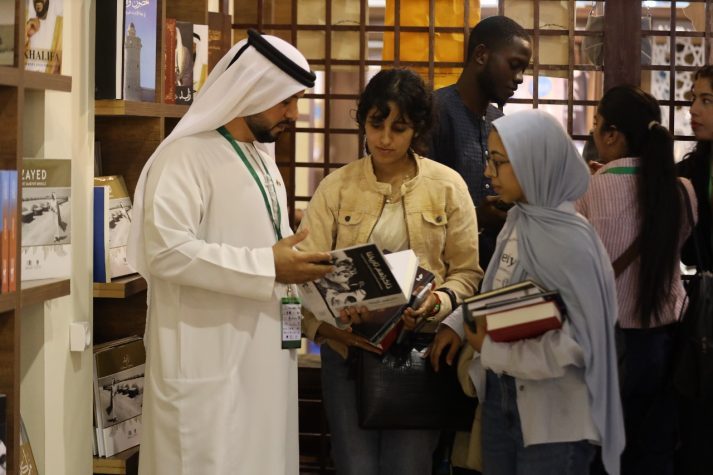
The National Library and Archives (NLA) has concluded its participation in the United Arab Emirates Pavilion at the 16th edition of the Salon du Cheval d’El Jadida (Horse Exhibition), held in the city of El Jadida, Kingdom of Morocco. During the event, the NLA showcased a distinguished collection of its publications and historical and cultural treasures that document the UAE’s development and highlight the deep fraternal ties between the United Arab Emirates and the Kingdom of Morocco.
The NLA booth attracted a large number of exhibition visitors, featuring nearly 100 publications covering topics related to history, culture, and heritage. Among the most distinguished works on display was The History of Moroccan-Emirati Relations, which serves as a documentary reference highlighting the religious, scientific, and cultural ties uniting the two nations through various historical periods. Another notable book was Zayed: A Journey in Pictures, which is a photographic tribute to the late Sheikh Zayed bin Sultan Al Nahyan, the Founding Father of the UAE, portraying his visionary leadership and his lifelong commitment to building a nation grounded in sustainable development and noble human values.
The NLA also presented a selection of rare historical photographs capturing moments between the late Sheikh Zayed bin Sultan Al Nahyan and the late King Hassan II, as well as images of His Highness Sheikh Mohamed bin Zayed Al Nahyan, President of the UAE and His Majesty King Mohammed VI of Morocco. These visual records reaffirm the depth of the strong bilateral relations between the two brotherly nations.
In addition, the NLA booth featured photographs, documents, and documentary films that shed light on the UAE’s enduring bond with purebred Arabian horses and its active participation in equestrian festivals and races in both the UAE and Morocco—reflecting the shared cultural passion of both nations for this noble heritage.
The participation of the National Library and Archives underscores its dedication to preserving the memory of the nation. It also aims at documenting the UAE’s historical and cultural relations, and and strengthening the UAE’s presence in international heritage and cultural events—reflecting the country’s vision of safeguarding its identity and promoting shared values.
The National Library and Archives Organizes a Symposium on Human Translation and Artificial Intelligence
In conjunction with the International Translation Day,
The National Library and Archives Organizes a Symposium on Human Translation and Artificial Intelligence
The National Library and Archives organized a symposium titled “Human Translation and Artificial Intelligence: Toward a Shared Future”, in conjunction with the world’s celebration of International Translation Day. The symposium aimed to broaden the horizons of constructive dialogue and promote the exchange of expertise and knowledge in this vital and evolving field.
The symposium highlighted the importance of translation in building bridges of communication among nations and promoting mutual understanding and rapprochement of Cultures. It also underscored the United Arab Emirates’ status as a leading regional model in supporting the translation movement as part of its cultural and knowledge strategy. Additionally, the symposium reviewed the prominent role of the National Library and Archives in this field through its organization of the Annual International Translation Conference, which serves as a pioneering platform that integrates language, technology, and knowledge, opening new horizons for the future of translation in the Arab world and reinforcing the UAE’s leading role in the production and dissemination of knowledge.
The symposium featured participants from the National Library and Archives, including Professor Dr. Saddik Gouhar, Translation Expert, and Mrs. Aysha Al Dhaheri, Head of Translation and Publication Section, along with a number of translators. Participants discussed the latest trends and key challenges in translation, emphasizing the importance of the advantages offered by the artificial intelligence technologies, such as fast completion of translations, reduced costs, multilingual capabilities, continuous learning, and support for professional translators through the development of specialized linguistic pathways – while stressing the importance of maintaining privacy and data confidentiality.
The symposium also addressed the challenges associated with the use of machine translation, particularly when dealing with historical, religious and cultural texts. These challenges include inaccuracies in conveying context, loss of cultural nuance, literal and stylistic errors, privacy risks, mishandling of sensitive matters, and the absence of literary creativity, tone, and style, as well as challenges related to linguistic consistency and the ethical responsibilities of translators.
The symposium was attended by His Excellency Dr. Abdulla Majid Al Ali, Director General of the National Library and Archives, and Mr. Hamad Al Hamiri, Director of Research and Knowledge Services Department. Both participated in discussing the symposium’s themes and presenting the best professional practices in translation, emphasizing the importance of establishing clear professional and ethical standards, using machine translation as an initial draft, utilizing specialized terminologies and dictionaries, and translating specialized texts in parts to ensure the quality of the final output.
The symposium concluded by reaffirming the importance of balancing between leveraging modern technologies and preserving the cultural and literary accuracy of texts, as a means of advancing the translation sector and enhancing its role in the transfer and localization of knowledge.
It is noteworthy that the National Library and Archives, as part of its projects in the field of AI, has launched a transcription and translation system, including a module for translating written texts, which has effective tools that support the work of researchers and historians.
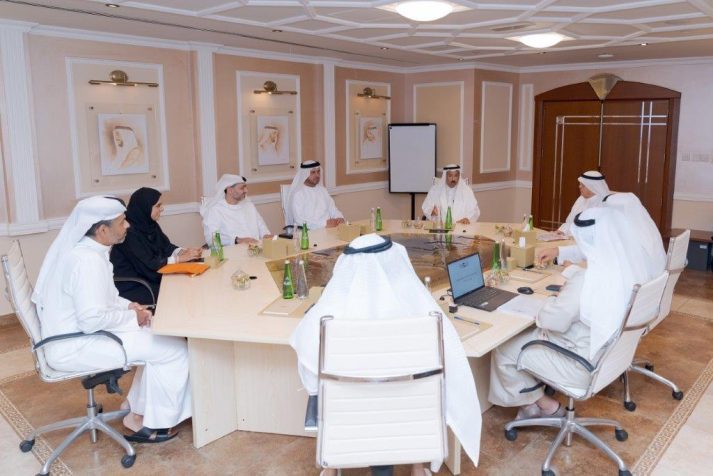
The Board of Directors Expresses Its Appreciation to the National Library and Archives for Its Local and International Projects and Initiatives.
Al Midfa Affirmed the Importance of the National Library and Archives’ Role in Enhancing the Performance of the Higher Committee for Regulating Documents and Archives in the UAE
The Board of Directors Expresses Its Appreciation to the National Library and Archives for Its Local and International Projects and Initiatives.
The Board of Directors of the National Library and Archives, in its meeting chaired by His Excellency Hamad bin Abdul Rahman Al Midfa and attended by the Board members, emphasized the importance of the projects and initiatives undertaken by the National Library and Archives in collecting and preserving records, along with the national library’s initiatives and methods of its development. The Board also emphasized the National Library and Archives’ commitment to fostering national education among generations and in supporting knowledge societies.
The Board of Directors, during its meeting at the headquarters of the National Library and Archives, praised the institution’s commitment to its strategic plan extending until 2032, that aims to enhance institutional efficiency, document and preserve the authentic UAE history and cultural heritage, and consolidate the use of artificial intelligence and its applications in the fields of archiving, documentation, and the national library to promote efficiency and innovation. The Board also highlighted the National Library and Archives’ successful local and international projects and initiatives, which reflect its dedication to exchanging expertise and distinguished experiences in its field of work, while achieving its objectives and pursuing its journey toward the future, as as it collects, preserves, and safeguards the UAE documentary and cultural heritage for future generations in accordance with the highest global standards that align with the rapidly evolving developments ahead.
His Excellency Chairman of the Board of Directors praised the National Library and Archives’ pivotal role in activating the work of the Higher Committee for Regulating Records and Archives in the UAE, which serves as an important milestone in the nation’s archival journey and a firm step towards achieving the desired alignment between the policy of the National Library and Archives and the policies adopted by various local entities within each emirate in the field of preservation and organization of documents, in line with the aspirations of the wise leadership.*
The Board reviewed the latest decisions issued regarding the organizational structure of the National Library and Archives, approved the executive regulations, and appointed an Acting Executive Director for the National Library and Archives.
The Board of Directors also discussed the decisions related to the establishment of the Higher Committee for Regulating Records and Archives in the UAE, financial powers, and contract awards at the National Library and Archives.
The Board of Directors reviewed the financial report for the first half of the current year 2025, the draft budget of the National Library and Archives, and updates on the implementation of its strategic plans. Additionally, the Board approved the final accounts for 2024 and commended the internal audit reports of the first half of year 2025.
The Board expressed its gratitude to the department directors and all staff of the National Library and Archives, urging them to continue their efforts in the next phase, as the UAE, under its wise leadership, continues its journey toward the future with aspirations to be a leader among the nations of the world.
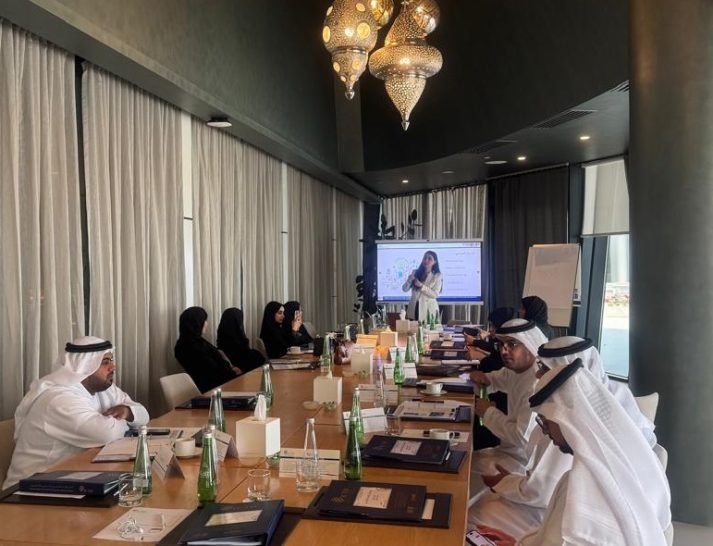
The National Library and Archives Enhances Corporate Communication Skills Among Its Employees
Concluded a Training Course in Corporate Communication,
The National Library and Archives Enhances Corporate Communication Skills Among Its Employees
The National Library and Archives, in collaboration with the International Center for Training and Development, concluded a training course on the fundamentals, strategies, and evolution of corporate communication. The course aimed to strengthen corporate reputation and identity in the public mind, foster a positive image among audiences, and enhance internal communication. This initiative forms part of a series of specialized educational programs through which the National Library and Archives seeks to refine employees’ skills and develop their professional capabilities.
Held at the Jumeirah Saadiyat Island Hotel in Abu Dhabi, the course was attended by a large number of employees from the Corporate Communication and Community Department at the National Library and Archives, particularly those involved in managing internal and external relationships and interactions. The course aimed at enhancing their skills in employing effective corporate communication techniques and keeping pace with modern organizational developments.
The three-day training course, delivered by Mrs. Tohama Berkdar, addressed several key topics focused on corporate communication and the development of a comprehensive strategy for managing information and relationships between the institution and its internal and external audiences. The course aimed to build the institution’s positive image and reputation, achieve its goals, and earn the trust of customers and partners. This, in turn, plays a vital role in crisis management by ensuring swift and transparent responses, while also fostering corporate identity and loyalty, facilitating decision-making, and achieving the strategic goals of the institution.
The trainer introduced participants to the fundamentals of corporate communication, methods for developing communication strategies from international and cultural perspectives, and showed them the mechanisms to measure corporate reputation.
The specialized course opened avenues into various fields of corporate communication, including journalism and e-journalism, digital media, media relations, employee communication, and crisis communication, among others. It also explored recent developments in corporate communication, emphasizing the importance of leadership and change management, corporate social responsibility and community relations, and the integration of public relations within these frameworks. The course further addressed communication within institutions, including corporate and marketing communication, internal communication, and the organization and planning of corporate communication.
The course enriched the participants’ knowledge through open discussions, brainstorming sessions, and practical exercises, ensuring the integration of theoretical and practical aspects and the achievement of the intended objectives. At the conclusion of the course, participants received certificates in corporate communication.
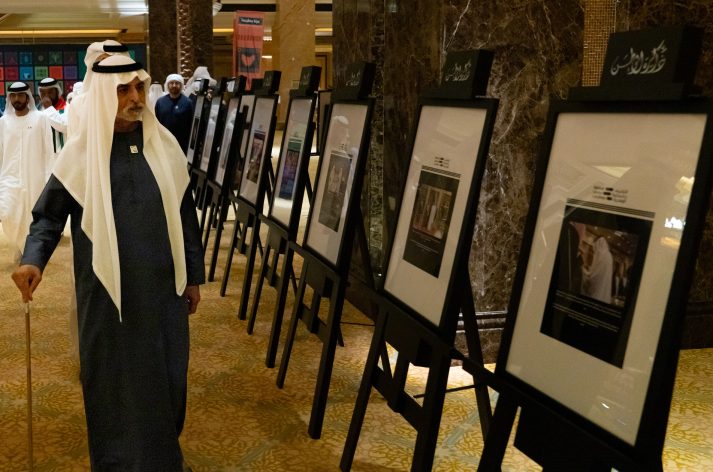
UAE’s National Library and Archives joins the Embassy of the kingdom of Saudi Arabia in celebrating the 95th National Day
UAE’s National Library and Archives joins the Embassy of the kingdom of Saudi Arabia in celebrating the 95th National Day
The National Library and Archives (NLA) participated alongside the Embassy of the Kingdom of Saudi Arabia in the celebration of the 95th National Day, which this year was held under the theme “Our Pride is Our Nature.”
To mark the occasion, the NLA organized a historical photography exhibition that underscored the profound fraternal and strategic relationship between the UAE and Saudi Arabia. This participation highlighted the NLA’s crucial role in documenting the two nations’ evolving ties, which continue to see significant development across all sectors.
The NLA’s exhibition featured dozens of photographs chronicling key meetings between the leaderships of both countries. H.E. Sultan bin Abdullah Al-Anqari, the Saudi Ambassador to the UAE, expressed deep appreciation for the NLA’s efforts in preserving the record of these enduring historical relations.
Attendees viewing the display were given a window into the exemplary history of bilateral relations. The photos highlighted the shared aspirations, mutual respect, and close cooperation, which define this leading model of relations between both countries.
The display’s content served as a powerful testament to the exceptional relationship between the UAE and Saudi Arabia—a cultural and historical model for sibling nations. It reflects the continuous progress and vision alignment between the two leaderships, which consistently reinforce the interests of both peoples.
Hosted at the Saudi Embassy’s official ceremony in Abu Dhabi’s Emirates Palace, the NLA’s exhibition drew a remarkable crowd of well-wishers and participants.
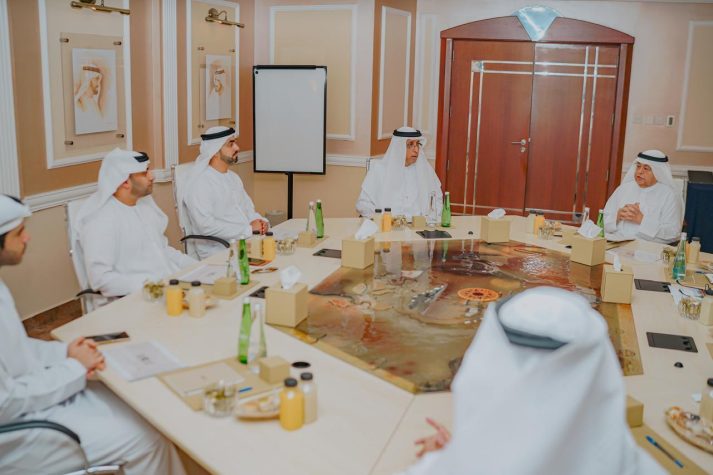
Higher Committee for Regulation of Document and Archive, chaired by H.E. Hamad Al Madfaa, holds its first session at the National Archives and Library.
Safeguarding the nation’s history: Higher Committee for Regulation of Document and Archive, chaired by H.E. Hamad Al Madfaa, holds its first session at the National Archives and Library.
The Higher Committee for Regulation of Document and Archive across the UAE convened its inaugural meeting under the chairmanship of H.E. Hamad bin Abdul Rahman Al Midfa, Chairman of the Board of the National Library and Archives (NLA). This meeting followed His Excellency’s decision to establish the Committee, tasked with supervising the organization, management, and monitoring of documents within government entities. The Committee underscores the significance of historical documents and the importance of safeguarding them for posterity.
H.E. Hamad Al Midfa opened the session with remarks highlighting the importance of the Committee’s first meeting, describing it as a key milestone in the nation’s archival development. He emphasized that it represents a firm step toward achieving alignment between the NLA’s policies and those implemented across local authorities in each Emirate regarding the preservation and organization of documents. He further affirmed that the NLA is fully prepared to provide advisory, technical, and technological support to government entities, and to foster collaboration and integration.
His Excellency expressed optimism that the Committee, comprising members with diverse expertise, will be able to develop a clear roadmap leading to best practices in documentation and the preservation of the national memory, alongside fulfilling the aspirations of the nation’s leadership.
The meeting, held at the NLA’s headquarters, reviewed the details of the decision to establish the Higher Committee, chaired by H.E. Hamad Al Midfa, with membership including:
• H.E. Dr. Abdullah Majed Al Ali, Director General of the National Library and Archives, Vice Chairman of the Committee.
• H.E. Mohamed Salem Al Hamli, Executive Director of the Government Protocol Sector in Abu Dhabi.
• H.E. Dr. Mohamed Salem Al Mazrouei, Board Member, Mohammed Bin Rashid Al Maktoum Library, Dubai.
• H.E. Salah Salem Al Mahmoud, Director General of Sharjah Archives, Sharjah.
• H.E. Mohamed Al Kaabi, Executive Director, Government of Ajman Media Office.
• H.E. Haitham Sultan Al Ali, Director General, Department of Tourism and Archaeology, Umm Al Quwain.
• H.E. Ahmed Obaid Al Teneiji, Director General, Department of Antiquities and Museums, Ras Al Khaimah.
• H.E. Dr. Suleiman Mohamed Al Kaabi, Director General, Fujairah Government Excellence Program.
As part of its mandate to supervise the organization of documents within local government entities, the Committee highlighted the importance of assessing the current status of archives, developing policies and procedures for document preservation and organizational management, monitoring evaluation processes, and ensuring the proper preservation of digital records. These activities are to be conducted in accordance with Federal Law No. 7 of 2008 concerning the National Library and Archives, its amendments, and executive regulations.
Dr. Hamad Al Mutairi, Executive Director of the National Library and Archives, presented the Committee’s work plan, which includes establishing subcommittees and working groups in emirates lacking a designated coordinating body. The committee agreed to prioritize completing archival assessments, submitting periodic reports, and tracking the implementation of recommendations.
Committee members emphasized the importance of establishing subcommittees or working groups within each government entity. These groups are tasked with preparing diagnostic and follow-up reports on archival conditions, submitting periodic reports to the Higher Committee, and monitoring challenges alongside proposing appropriate solutions.
In this regard, H.E. Dr. Abdullah Majed Al Ali, Director General of the National Library and Archives, confirmed that the NLA will take responsibility for delivering awareness workshops for local committees in each Emirate, organizing training programs for staff, and responding to all requests from government entities across the UAE.
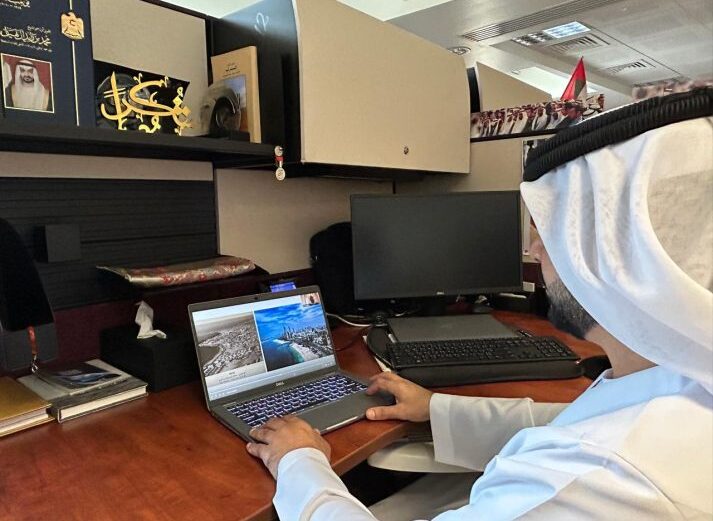
The National Library and Archives Emphasized the Significance of Narratives in Sustaining Heritage Based on Its Distinguished Experience in Collecting and Preserving Oral History
Within the Initiatives of the GCC Documentation and Research Centers General Secretariat
The National Library and Archives Emphasized the Significance of Narratives in Sustaining Heritage Based on Its Distinguished Experience in Collecting and Preserving Oral History
As part of the initiatives of the GCC Documentation and Research Centers General Secretariat, the National Library and Archives, one of the prominent members of the General Secretariat, organized a lecture titled: “Memory’s Echoes: The Role of Documenting Narratives in Sustaining Heritage”. The lecture highlighted the cultural similarities and enduring connections among GCC communities and peoples, reflecting the unity of their roots, culture, heritage, and history. It emphasized the need to collect and document oral narratives through audio-visual records as part of oral history activities, complementing written history for future generations.
The lecture, presented by Dr. Aisha Bilkhair, Research Advisor at the National Library and Archives, began with an introduction to the concept of oral history, addressing mental memory—where events are retained and recalled when needed—and explaining how this memory depends on the narrator’s intelligence and skills. She also highlighted that memories are preserved in the mind, particularly those tied to emotions and tangible elements. Dr. Bilkhair explained that when memory and recollection merge, oral history emerges, defined as the documentation of individuals’ life stories and memories in audio and visual form. In this way, it provides a vision of reality, investigates facts, and preserves the memory of time and place, complementing what written documents may lack and allowing it to be passed on across generations to enrich the history of the nation.
The lecture also explored the concept of water memory, genetic memory, and the reading of the journey of time, along with collective memory, which retains knowledge and behaviors that continue to shape community life and social development.
Dr. Bilkhair stressed the strategic importance of the Executive Regulation of Federal Law No. (7) of 2008 concerning the National Library and Archives, which placed oral history at the core of its first article. The law defined oral material as information collected verbally, recorded by sound and writing, to complement or replace missing information, and incorporate that into the Archives’ holdings after being officially documented.
She highlighted that the National Library and Archives has modeled its oral history system on the University of California, Berkeley, which has prioritized oral history since 1953. She described the methodology, beginning with identifying interview topics, setting criteria for selecting narrators, applying best practices in collecting audio-visual materials with digital equipment, classifying content, reviewing narratives to ensure coherence and clarify colloquial terms, editing for linguistic accuracy, and archiving interviews in a multimedia system.
Dr. Bilkhair emphasized that since 2009, the National Library and Archives’ Oral History Project has been the only projrct affiliated with multiple international bodies, adhering to globally recognized standards and scientific and legal principles.
She outlined the criteria for selecting narrators, often senior citizens considered living treasures of the UAE, and detailed the process of preparing for interviews—gathering background information, drafting questions, building rapport, scheduling, testing recording equipment, and ensuring technical quality.
She also addressed interview ethics, the researcher’s responsibilities during the session, and the goals of documenting oral narratives.
Dr. Aisha Bilkhair’s lecture was enriched with practical examples from her fieldwork, including methods for verifying newly revealed information. She stressed that most interviews undergo historical verification supported by photographs and documents to enhance the credibility of oral narratives. This process enables skilled researchers to add robust and accurate information that fills gaps in the written historical record.
The National Library and Archives organizes a Back-to-school Community Initiative for People of Determination
In collaboration with Zayed Higher Organization for People of Determination,
The National Library and Archives organizes a Back-to-school Community Initiative for People of Determination
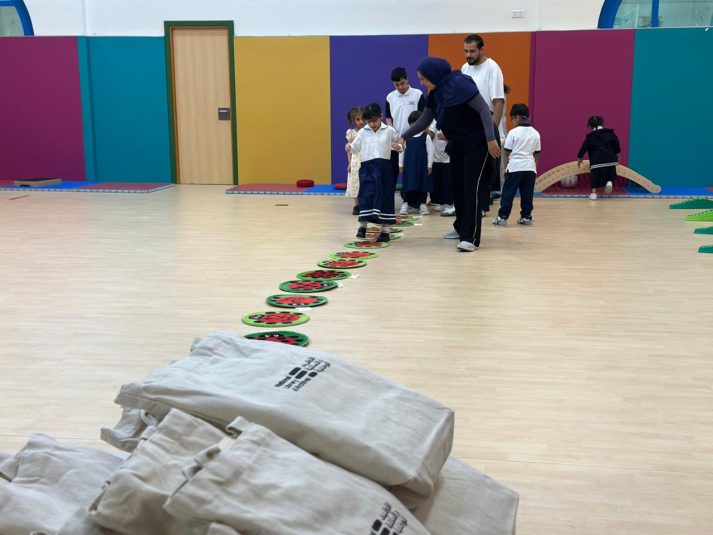
As part of its active community engagement during the Year of Community, and in collaboration with Zayed Higher Organization for People of Determination, the National Library and Archives organized a back-to-school community initiative for People of Determination. The initiative included distributing numerous motivational gifts to students of determination, with the aim of bringing joy to their hearts and strengthening their confidence and determination.
The National Library and Archives is keen to involve People of Determination in numerous community events and activities. providing them with support in line with its national and social responsibility toward this vital segment of society. This commitment reflects the importance of coordinating efforts with relevant entities to raise public awareness, ensure their effective inclusion in society, and empower them across the different educational stages, while bringing them joy and happiness.
Students of Determination expressed their happiness with the National Library and Archives’ participation in this initiative, which had a positive impact on activating their role, boosting their confidence and determination, and supporting their ambitious journey toward learning and habilitation.
At the conclusion of the initiative, Zayed Higher Organization for People of Determination extended its gratitude to the National Library and Archives on its societal role and collaboration in bringing joy to People of Determination, reinforcing their presence, and encouraging their active contribution to community development.
It is noteworthy that the National Library and Archives has given considerable attention to the People of Determination. It has published summaries of its key publications in Braille for students with visual impairments who read in Braille. These include: “Zayed: From Challenges to Union”, “Khalifa: Journey into the Future”, and “Qasr Al Hosn 1795 – 1966”. As part of its continued support, it also provided them with a special device for reading Braille.

The National Library and Archives Enriches Students’ Summer Camps
With Activities that Strengthen Loyalty and Belonging and Consolidate National Identity
The National Library and Archives Enriches Students’ Summer Camps
In line with its role as a strategic partner in fostering proper national upbringing for future generations, the National Library and Archives (NLA) participated in the students’ summer camps organized by the relevant entities to help students make the most of their summer break – with a wide range of activities. The activities included programs aim to deepen the sense of belonging to the homeland, reinforce loyalty to the wise leadership, and promote strong national identity among youth.
The NLA participated in various locations, organizing 71 activities that benefited more than 3,777 individuals. The first venue was the NLA headquarters, where it hosted the students, offered them lectures on national topics. NLA specialist staff took them on tours in Sheikh Zayed bin Sultan Hall, Sheikh Suroor Hall, and the library halls, where they explored key milestones in the history of the UAE, along with important references and sources they can rely on.
NLA specialists visited students’ summer camps affiliated with Sandooq Al Watan program, where they delivered art workshops focused on landmarks of the UAE, in addition to lectures on national identity and Emirati values.
The NLA joined the summer camp of the National Rehabilitation Center and participated in programs aimed at developing students’ life skills. It delivered a lecture on the Union era of that highlighted the importance of 18 July 1971, in the march toward federation established by the late Sheikh Zayed bin Sultan Al Nahyan and his fellow Founding Fathers. Students also participated in the Journey Game, a popular activity that enriches their knowledge with documented information. This national game was inspired from the life of the Founder and Builder, the late Sheikh Zayed bin Sultan Al Nahyan, as well as by the historical and heritage knowledge documented in NLA’s publications.
Furthermore, the NLA participated in the Juvenile Care Center’ summer camp, where it presented workshops based on the educational booklet “Watani Al Emarat” (My Nation, The Emirates). The booklet contains documented information, exercises, activities, and interesting training, all related to the history of the UAE, its heritage, geography, and vibrant present. Then the NLA delivered lectures on Emirati values.
The NLA also took part in the Ministry of Education’s top ten summer camps, delivering lectures on national identity and holding art workshops for children.
It is noteworthy that the NLA played a key role in introducing summer camp participants to the concept of Emirati values and underscoring their importance in deepening national identity, loyalty, and belonging to the homeland. The NLA encouraged participants to uphold and spread these values as a cornerstone of sustainable development. These activities also contributed to fostering a sense of citizenship and instilling sound behavioral patterns among participants.
Through its diverse national and community activities, the NLA remains committed to sharing knowledge, instilling values of cooperation and belonging, preserving cultural heritage, enhancing intergenerational ties, and laying the foundations for sustainable growth, in line with the principles affirmed by the Year of Community 2025.
The National Library and Archives Organizes a Lecture on Al-Ramsa … Repository of Identity and Memory
Within the Framework of Enriching Knowledge Societies,
The National Library and Archives Organizes a Lecture on Al-Ramsa … Repository of Identity and Memory
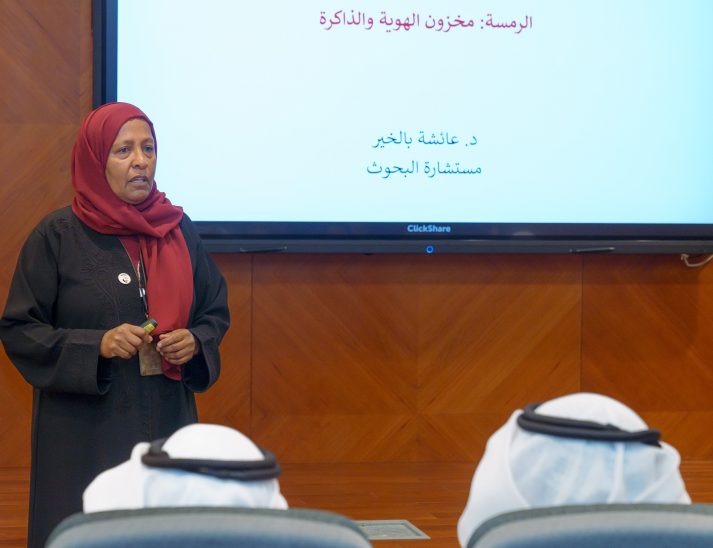
As part of its cultural season, the National Library and Archives organized a national educational lecture titled: “Al-Ramsa: Repository of Identity and Memory”. The lecture emphasized that Al-Ramsa—or speech—plays an important role in social communication and in instilling national identity, as it is part of the cultural heritage that reflects the values, customs, and traditions of the society, and contributes to promoting the dense of belonging.
In a style that blended images with words, their meanings, and connotations, Dr. Aisha Bilkhair, Research Advisor at the National Library and Archives, took participants on a journey into the depths of the Emirati dialect (Al-Ramsa), stressing the importance of paying attention to it and preserving it. She pointed out that words—or Ramsa—play a vital role in satisfying curiosity, acquiring knowledge, analysis and classification, and facilitating communication among individuals and groups. She noted that in Lisan al-Arab Lexicon, Ramsa means “hushed speech,” while Ramsat refers to sayings, and Ramis means “the speaker.” She also revealed the direct uses of Ramsa as a social term among Emiratis, such as “Ramees” and “Ramas,” and highlighted expressions like “Hathraban” and “Hidmah” are used to describe an excessive talker, and other expressions.
Held at Liwa Hall at the headquarters of the National Library and Archives, the lecture explored the (ramsat) phrases of courtesy and social communication used within members of the society. Among the most deeply rooted phrases in the cultural and societal heritage is “La Tsheloon Hamm” (meaning ‘don’t worry’), along with many other customs and traditions connected to the Emirati dialect, puns, or forms of cryptic language used among members of the society in obscure words and phrases with indirect meanings. Dr. Bilkhair highlighted the appropriate responses and answers in various occasions such as congratulations of Eid and weddings, success, apologies, and gratitude. She emphasized that individuals acquire dialectal terms from their mothers, environment and peers, as well as through exposure to poetry, sayings and proverbs. Furthermore, she examined the loan words and phrases in the Emirati dialect, highlighting the importance of selecting a word before pronouncing it and knowing its dimensions, as every context has a saying.
Dr. Aisha Bilkhair cited some verses of poetry by the late Sheikh Zayed bin Sultan Al Nahyan and Sheikh Sultan bin Zayed the First, may they rest in peace, revealing their creativity and refined taste in selecting words rooted in classical Arabic with profound meanings. These poems reflected not only elevated language and eloquent expressions but also tender emotions blended with wisdom.
The Research Advisor also discussed the role of poetry in everyday speech, recalling a number of popular proverbs and traditional terms and expressions once familiar in Emirati communities.
She emphasized the importance of preserving the Emirati Ramsa, sustaining the cultural heritage, and passing it on to future generations, describing the process as a sacred mission to be carried out with pride and honor.
Dubai and Its Palace and Towers… From Roots to Global Prominence
In a Lecture Predented by the National Library and Archives,
Dubai and Its Palace and Towers… From Roots to Global Prominence
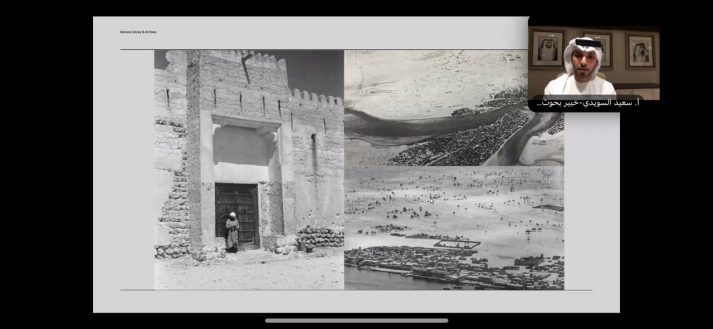
As part of its cultural season, the National Library and Archives (NLA) organized a virtual lecture on Dubai palace and towers, highlighting the historical roots of the Emirate of Dubai, which has since evolved into a global city. The lecture shed light on Dubai’s remarkable journey of progress and prosperity within a short span of time—an impressive transformation for all who contemplate it.
The lecture, delivered by Mr. Saeed Khamis Al Suwaidi, Research Expert at the NLA, began by exploring Dubai in 1822. when the city was enclosed by a short wall made of gravel and clay, fortified with towers for protection. The wall surrounded the city from all directions except the north, which opened onto the Creek.
The lecturer highlighted Al-Neif Tower, notable for its elevated position above the water, exposing the area from all directions. The tower was located near the British Bank and offered a clear view of the creek extending to its far end.
The second landmark was Murabba‘at Al Qurayshat, also known as Murabba‘at Al Niyaf, followed by the third landmark, Burj Al Uqaydat, named after the Al Uqayda family of Al Bu Falasah tribe. This tower overlooked the southern area and was used to guard palm groves and water wells. From these landmarks, the speaker transitioned to Al Hamriyah, an area named after a variety of palm trees known as Al Himri.
The main landmark discussed was Dubai Palace, which, according to the lecturer’s sources, may have been a separate structure from Al Fahidi Fort. It was described by M. Hutton as a square-shaped fort with a dilapidated tower at one of its corners.
The central landmark, however, was Dubai Palace, which, according to the lecturer’s sources, may have been a different structure from Al Fahidi Fort. Engineer Hutton described it as a square-shaped fortress with a deteriorating tower at one corner.
Al Suwaidi noted that in 1841, when a fever epidemic swept the area, residents were compelled to move outside the walls of Dubai for the purpose of isolation and to prevent the spread of the disease. He further mentioned that Al Fahidi Fort was built to the north of Dubai Palace during the reign of Sheikh Hasher bin Maktoum (1859–1886), where he and his descendants resided thereafter.
Later, Al Fahidi Fort was repurposed as a prison to discipline those who broke customs and laws after the ruling family moved to Al Shindagha. In 1971, Sheikh Rashid bin Saeed converted it into a museum.
It is noteworthy that the lecturer based his presentation on several sources, foremost among them a sketch by Lieutenant Robert Cogan depicting the city of Dubai, its palm groves, Al Ras, and Al Shindagha. However, in 1829 the city underwent a restoration of its entire wall, towers, and palace.
The National Library and Archives Celebrates Union Day with a Series of National Events
With the Aim of Enriching the Memory of the Nation on Social Media and Promoting Loyalty and Belonging
The National Library and Archives Celebrates Union Day with a Series of National Events
To commemorate the Union Day when the UAE—under the leadership of the late Sheikh Zayed bin Sultan Al Nahyan and his fellow Founding Fathers—embarked on its historic union, the National Library and Archives, in cooperation with its strategic partners, has prepared an extensive program of events and activities with a strong national focus.
The initiatives, designed to strengthen loyalty to the wise leadership and promote belonging to the nation, feature documented historical information shared with numerous official entities to promote the values and principles instilled by the Founding Fathers. The program also includes a lecture titled: “Union Day in the Journey of the Establishment of the UAE” and a series of workshops for young people and children, highlighting the values of that momentous day.
On a related context, the National Library and Archives provided a number of UAE institutions and official bodies with historical documents related to July 18, 1971, to enrich the documentary exhibitions they have organized at their headquarters, or to include the same on their websites and social media channels.
Through its activities, the National Library and Archives highlights the importance of this day, which represents a pivotal moment in the history of the United Arab Emirates—a moment that laid the foundations of the union and cemented the vision of a unified and strong nation. On this day, the rulers of the Emirates signed the Union Document and the UAE’s Constitution, officially proclaiming the name of the United Arab Emirates, in a step that preceded the formal declaration of the union on December 2 of the same year.
The National Library and Archives affirms that “Union Day” is an annual occasion for pride in our national identity and a renewal of loyalty and belonging. It is a constant source of inspiration, reflecting the UAE’s determination to move forward, under the guidance of its wise leadership, towards strengthening its position in various fields of development, while preserving the authentic values instilled in the conscience of the nation by its founder and builder, Sheikh Zayed bin Sultan Al Nahyan, may Allah rest his soul in peace.